

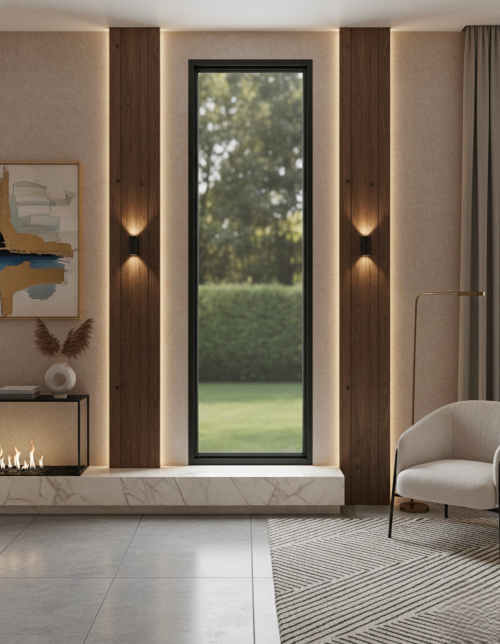
When people think about comfort at home, they usually think about furniture, temperature, or layout. But one of the biggest influences on how a home feels every day is something much less obvious: the doors and windows.
They shape how light enters the space, how connected the home feels to the outdoors, how quiet the interiors are, and even how relaxed the environment feels overall.
In modern homes, doors and windows are no longer just functional features, they quietly define the daily living experience.
Comfort Starts with Natural Light
The way natural light enters a home has a major impact on how spaces feel.
Well-designed openings help create interiors that feel:
- Brighter without being harsh
- More open without losing warmth
- More calming throughout the day
This is why modern homes focus so heavily on thoughtful window placement and architectural openings.
Pull Quote:
“Daily comfort is often shaped by the things people notice the least.”
Openings Influence the Feeling of Space
Doors and windows directly affect how large, connected, and breathable a home feels.
Large openings and clean sightlines help create:
- Better flow between rooms
- Stronger indoor–outdoor connection
- A more open and balanced atmosphere
This is one reason oversized sliding systems have become such an important part of modern residential design.
Noise and Privacy Matter More Than People Realize
Comfort isn’t only visual, it’s emotional.
The right doors and windows can help create spaces that feel:
- Quieter
- More private
- More peaceful throughout the day
Poorly designed systems may allow excessive outside noise, visual exposure, or inconsistent comfort levels.
Well-designed openings help create a stronger sense of separation between the home and the outside world without making spaces feel closed off.
Airflow Changes How a Home Feels
Homes that feel fresh and comfortable are often designed around natural airflow.
Thoughtful openings help:
- Improve circulation throughout the home
- Create more breathable spaces
- Reduce the feeling of heaviness indoors
This is especially important in modern homes designed around indoor–outdoor living.
Pull Quote:
“A comfortable home doesn’t just look open, it feels breathable.”
Transitions Shape Daily Experience
One of the reasons modern homes feel more relaxing is because transitions between spaces feel smoother.
Large sliding openings and connected layouts help spaces flow naturally between:
- Living areas
- Outdoor spaces
- Natural views and light
Instead of feeling divided, the home feels connected and intentional.
Balance Creates Emotional Comfort
Homes feel more calming when there is visual balance between openness, light, privacy, and structure.
Thoughtful door and window placement helps create:
- Softer natural light
- Better proportions between spaces
- More comfortable daily living environments
These details often shape how a home feels emotionally, even if people don’t consciously notice them.
Pull Quote:
“The homes that feel the most comfortable are usually the ones designed with balance in mind.”
Modern Homes Prioritize Experience
Today’s homeowners are increasingly focused on how spaces feel to live in every day—not just how they look in photos.
This shift has increased the importance of:
- Architectural openings
- Natural light
- Indoor–outdoor flow
- Simplicity and comfort
Doors and windows now play a central role in creating homes that feel calm, connected, and livable.
Final Thoughts
The comfort of a home is shaped by much more than furniture or finishes. Doors and windows quietly influence light, airflow, privacy, connection, and overall atmosphere every single day.
At Love That Door®, we believe architectural openings should help create homes that feel more open, peaceful, and intentionally designed for modern living.
Explore Your Options
If you’re designing a home and want spaces that feel balanced, breathable, and comfortable every day,
Request a Free Consultation at lovethatdoor.com