

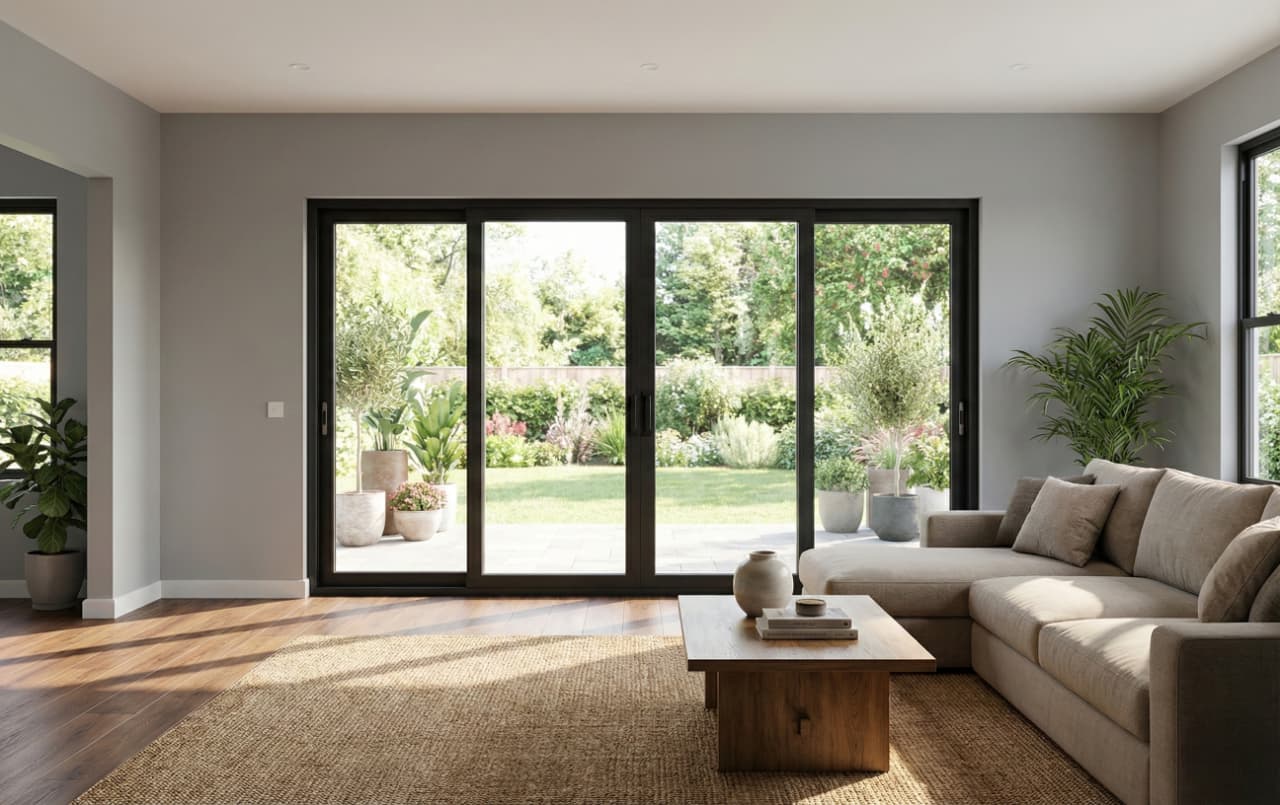
Have you ever walked into a home that instantly felt calm, open, and welcoming? And then entered another home that, despite being beautiful, felt heavy or uncomfortable?
The difference often has less to do with decoration and more to do with how the home was designed to experience light, space, and connection.
The homes that feel bright and peaceful are usually shaped by thoughtful architectural decisions especially when it comes to doors, windows, and natural light.
Natural Light Changes the Entire Atmosphere
One of the biggest factors influencing how a home feels is natural light.
Homes that feel peaceful typically use light in a softer, more intentional way. Instead of overwhelming spaces with brightness, they allow light to move naturally throughout the home.
This creates interiors that feel:
- More open
- More calming
- More balanced throughout the day
Well-designed openings help distribute light evenly, avoiding spaces that feel too dark or overly exposed.
Pull Quote:
“Peaceful homes aren’t always brighter, they simply use light better.”
The Flow Between Spaces Matters
A home can have beautiful finishes and still feel disconnected if the spaces don’t flow naturally.
Homes that feel calm are often designed with:
- Clear visual connections between rooms
- Openings that guide movement naturally
- Smooth transitions between indoor and outdoor spaces
This creates a sense of openness without making the home feel empty.
Connection to the Outdoors Creates Balance
Modern homes increasingly prioritize a stronger relationship with the outdoors.
Large architectural openings help:
- Bring natural views into the home
- Create better airflow and openness
- Blur the line between interior and exterior spaces
This is why oversized sliding doors and expansive glass openings have become such an important part of modern residential design.
Pull Quote:
“Homes feel calmer when they feel connected to nature.”
Balance Is More Important Than Size
Many people assume larger homes automatically feel more luxurious or peaceful. In reality, oversized spaces without balance can often feel cold or overwhelming.
Well-designed homes focus on:
- Proportion between openings and walls
- Balanced natural light
- A mix of openness and privacy
This creates spaces that feel more intentional and emotionally comfortable.
Windows Shape the Mood of a Home
The placement of windows affects far more than visibility, it affects mood.
Thoughtful window design can:
- Soften the atmosphere of a room
- Highlight natural textures and materials
- Create quieter, more calming interiors
Even smaller openings can dramatically improve how a home feels when they are positioned intentionally.
Simplicity Helps Spaces Feel More Peaceful
Homes filled with excessive decoration or visual clutter often feel busy and overstimulating.
Modern luxury homes increasingly focus on:
- Simpler architectural lines
- Cleaner visual flow
- Natural materials and textures
This allows light and space to become part of the design itself.
Pull Quote:
“The homes that feel the most peaceful are often the ones with the least visual noise.”
Comfort Is Created Through Design
Peaceful homes don’t happen by accident. They are shaped by decisions that prioritize:
- Natural light
- Comfort
- Connection
- Balance
- Everyday livability
Doors and windows play a major role in all of these elements, quietly shaping the experience of the home every day.
Final Thoughts
The homes that feel bright and peaceful are rarely defined by a single feature. Instead, they are created through thoughtful design choices that work together to shape atmosphere, comfort, and connection.
At Love That Door®, we believe architectural openings should help create homes that feel lighter, calmer, and more connected to the way people live today.
Explore Your Options
If you’re planning a home and want spaces designed around light, balance, and everyday comfort,
Request a Free Consultation at lovethatdoor.com