
Iron Door Companies Are Going Out of Business Across DFW — Here’s How to Protect Yourself


Chad Crenshaw
If you’ve been shopping for an iron door in Dallas–Fort Worth lately, you’ve probably noticed something: companies keep disappearing.
In the last 24 months alone, multiple iron door companies in the DFW area have gone bankrupt, quietly changed their names, or simply closed their doors. Master Iron Door. Entry Iron Doors. Treasure Iron Doors. And those are just the ones people know about.
But it gets worse.
The Bootleg Door Problem
- A company opens a showroom or a website
- They order doors from a factory overseas — a factory they don’t own, have never visited, and have no control over
- A container of doors shows up. They mark them up and sell them as “custom”
- When quality problems surface — and they always do — the company has no way to fix them because they didn’t build the door in the first place
- Margins shrink. Warranty claims pile up. The company folds.
How to Protect Yourself Before Buying a Door
Before you hand anyone a deposit, ask these questions:
1. How long have you been in business under this name?
If the answer is less than two years, ask what company they worked for before. If that company closed, ask why. A legitimate business will have a track record you can verify.
2. Do you own your factory?
Most iron door companies don’t. They order from a supplier’s catalog and hope for the best. If the company doesn’t control the manufacturing, they can’t control the quality — and they can’t stand behind the product when something goes wrong.
3. Can I visit your showroom?
A company with no showroom is a company with no investment in sticking around. If they’re working out of a truck or a rented office, that tells you everything about their commitment level.
4. What does your warranty actually cover?
Read it. The full document. Most “lifetime” warranties in the iron door industry are full of exclusions — the finish isn’t covered, the hardware isn’t covered, the glass isn’t covered. A warranty that doesn’t cover the parts most likely to fail isn’t really a warranty.
5. What happens to my warranty if you go out of business?
This is the question most people don’t think to ask — until it’s too late. If the company disappears, your warranty disappears with it. The only protection is buying from a company that’s built to last as long as the door itself.
Why Love That Door Is Different
We understand the skepticism. When customers walk into one of our showrooms, some of them have already been burned. They paid a deposit to a company that vanished. They bought a door that started rusting within a year. They’ve heard the promises before.
So we don’t ask anyone to take our word for it. We show them.
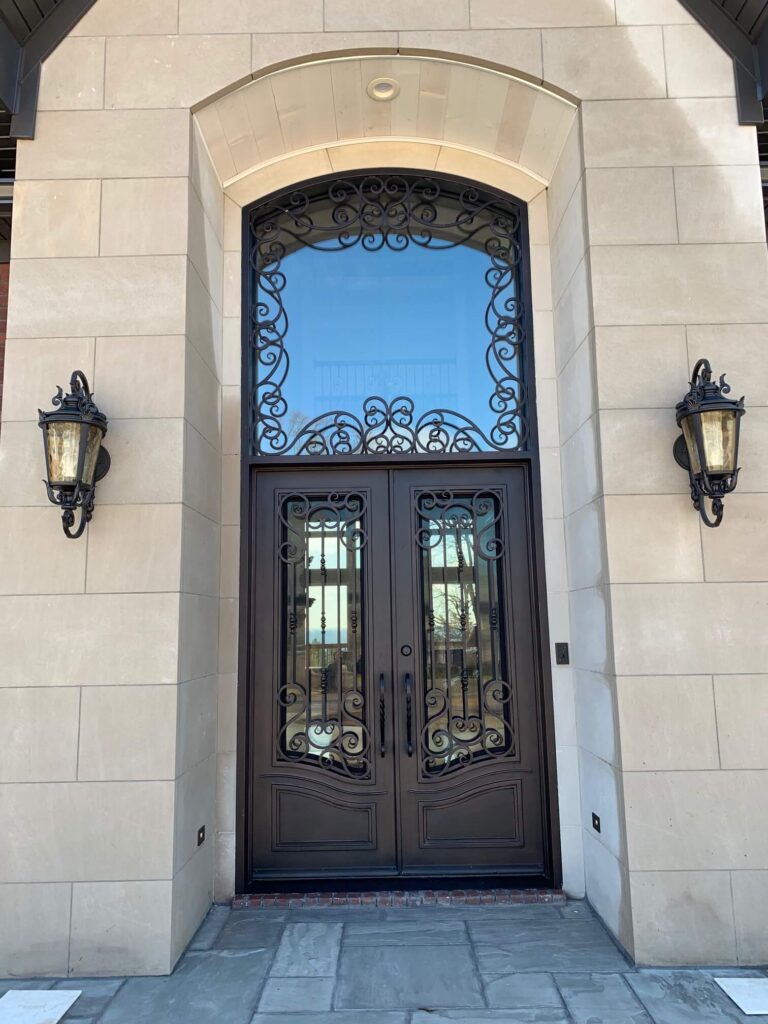
We’re not an iron door company. We’re a door company. We build steel doors, iron doors, aluminum patio doors, and brass doors — because limiting ourselves to one material would mean limiting what we can offer our customers.
We own our factories. We don’t order from a catalog. We don’t hope the container that shows up matches what we promised. We control every spec, every material, every process, and every quality standard — because we own the factories that build our doors.
We have four showrooms across DFW. Dallas. Frisco. Fort Worth. Grapevine. Walk in. Touch the doors. Ask anything. We’re not going anywhere.
We use 10-gauge cold-rolled steel. Not the thin, hot-rolled steel that budget iron door companies use to keep costs down. Our steel is heavier, stronger, and more precise — and it’s the reason our doors don’t develop the problems that send other companies’ customers looking for replacements.
Our warranty means something. Frame and slab. Lifetime. No asterisks. And because we’ve been here for years and we own our manufacturing, we’ll be here to honor it.
Our construction is patented. The double door system that Chad Crenshaw engineered solves the most common failure point in the industry — the center post that flexes, loses its seal, and lets air pour through. No one else has this because we hold the patent.
The Bottom Line
The DFW iron door market has a trust problem. Too many companies have taken money and disappeared. Too many customers have been left with cheap doors and worthless warranties — or worse, no door at all.
We can’t fix the industry. But we can be the exception to it.
If you’re shopping for a door — any door — do your homework. Visit a showroom. Ask hard questions. Verify that the company owns its manufacturing. Read the full warranty. And don’t give a 50% deposit to anyone who can’t prove they’ll be in business next year.
Or just come see us.
FAQs
A: Most iron door companies are resellers, not manufacturers. They order doors from overseas factories they don't own or control. When quality issues surface and margins shrink, they don't have the resources or manufacturing ability to fix problems. The business model isn't sustainable, which is why so many of these companies fold within a few years.
A: Visit their showroom in person. Ask how long they've been in business under their current name. Ask if they own their factory. Read the full warranty document. Check their BBB rating and Google reviews. A company that's invested in showrooms, manufacturing, and a long track record is far less likely to disappear with your deposit.
A: No. Love That Door is a door company that manufactures steel, iron, aluminum, and brass doors. We own our factories, hold patents on our construction methods, and operate four showrooms across DFW. We've deliberately built a business model that's the opposite of the fly-by-night iron door companies that keep closing across the metroplex.
A: Be cautious with any company asking for 50% or more upfront — especially if they don't have a showroom, a verifiable track record, or factory ownership. A legitimate company will have a transparent payment structure with milestones tied to production stages, not a single large upfront payment.
A: It disappears. A warranty is only as good as the company standing behind it. This is why buying from a manufacturer with factory ownership, multiple showrooms, and a long operating history matters — it's your best assurance that the warranty will actually be honored years from now.