

Aluminum Patio Door Energy
Ratings & Thermal
Performance
Home » Aluminum Patio Door Energy Ratings & Thermal Performance

Scroll To Explore

When you’re spending $10,000 to $50,000 on an aluminum patio door system, you need to understand what the energy performance numbers actually mean. Not just for your electric bill — for your comfort every single day, the longevity of the door, and whether the glass facing your backyard is quietly cooking your living room.
At Love That Door, we engineer our aluminum patio door systems to perform in Texas conditions from the extrusion up. Founder Chad Crenshaw’s explanation of thermal breaks covers the engineering behind the numbers. Here, we’ll break down the ratings themselves — what they mean, what numbers to look for, and how to compare doors across manufacturers.


AI Snippet Bait
A high-performance aluminum patio door in Texas should have a U-factor of 0.30 or lower and a Solar Heat Gain Coefficient (SHGC) of 0.25 or lower. The thermal break — engineered bends and air chambers in the aluminum extrusion — is what makes these ratings achievable. Without a properly engineered thermal break, an aluminum door in DFW will conduct heat straight into your home, adding $200-400 annually to your cooling costs.
The Three Numbers That Matter
Energy efficiency
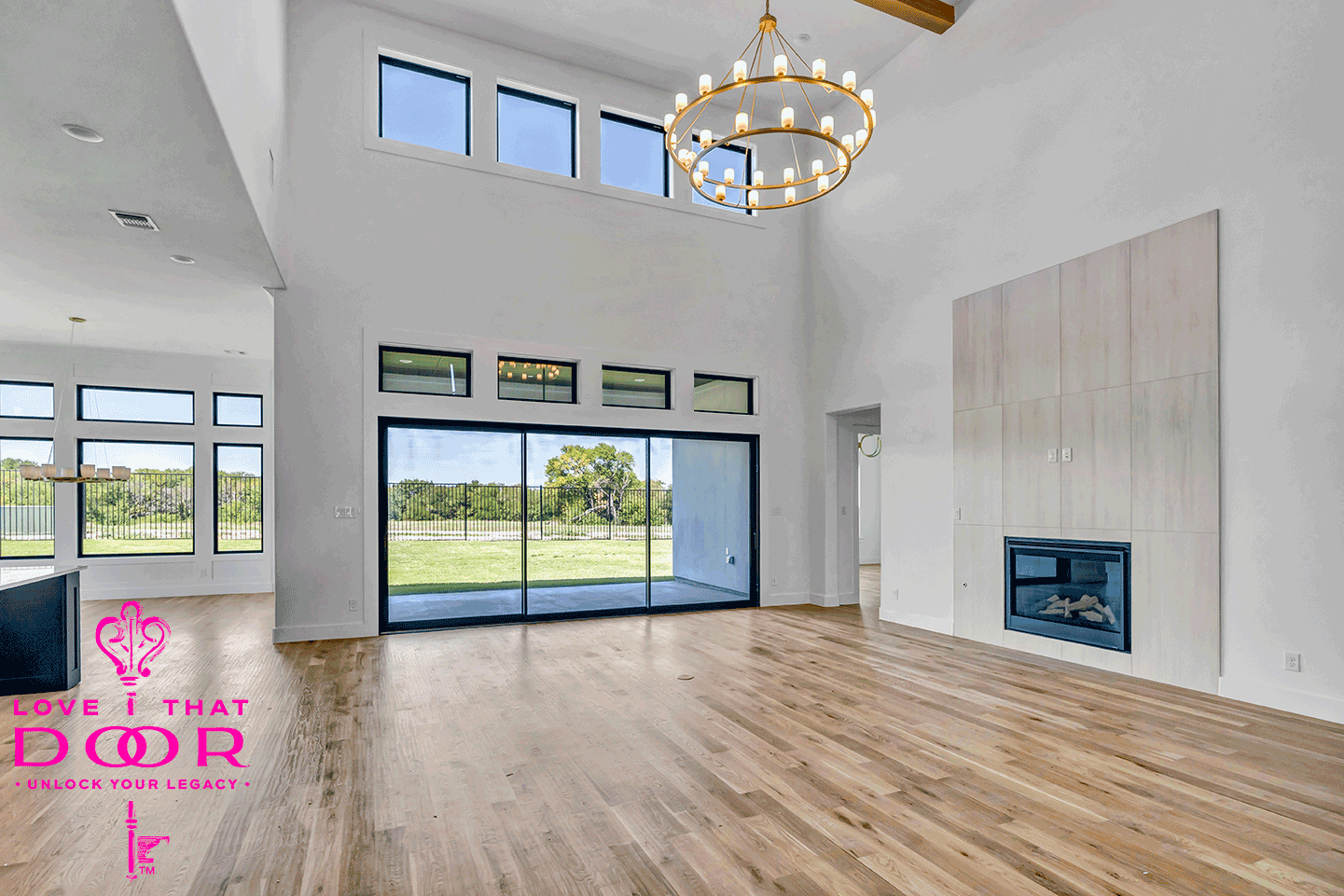
Every energy-efficient door is rated by three primary metrics. Here’s what each one means for your home:
U-Factor: How Well the Door Insulates
U-factor measures the rate of heat transfer through the entire door assembly — frame, glass, and all. The lower the number, the better the insulation. U-factor is the inverse of R-value (R=1/U). So a U-factor of 0.30 is equivalent to an R-value of 3.3.
For Texas: You want a U-factor of 0.30 or lower. This is achievable with a properly thermally broken aluminum frame and double-pane Low-E glass. Single-pane aluminum doors — still sold by budget manufacturers — typically have U-factors of 1.0 or higher, which means they’re essentially uninsulated.
Our thermally broken aluminum systems achieve U-factors as low as 0.25 with the right glass package. That’s competitive with high-end vinyl windows — from an aluminum door system that can span 20 feet or more.
Solar Heat Gain Coefficient (SHGC): How Much Sun Heat Gets Through
Ultrasmooth bottom running
SHGC measures how much solar radiation passes through the glass into your home. It’s a number between 0 and 1. Lower means less heat gets through.
For Texas: This number depends on which direction your door faces. A south-facing patio door in DFW gets direct sun for most of the day. You want an SHGC of 0.25 or lower. A north-facing door gets indirect light — an SHGC of 0.40 may be fine, and it’ll let in more natural light during winter.
Low-E coatings are what control SHGC. Our glass packages offer multiple Low-E coating options tuned for different sun exposures. One coating for your south-facing bifold, a different coating for your north-facing lift-and-slide — because the sun doesn’t hit every wall equally.
Visible Transmittance (VT): How Much Light Gets Through
VT measures how much visible light passes through the glass. It’s also between 0 and 1. Higher means more natural light.
This is the trade-off: coatings that reduce SHGC also reduce VT. A door with SHGC of 0.20 might only transmit 40% of visible light, making the room noticeably darker. Our energy efficiency expertise includes helping you balance heat rejection with natural light — because the right patio door should connect your home to the outdoors, not seal you off from it.
How Thermal Breaks Affect the Ratings
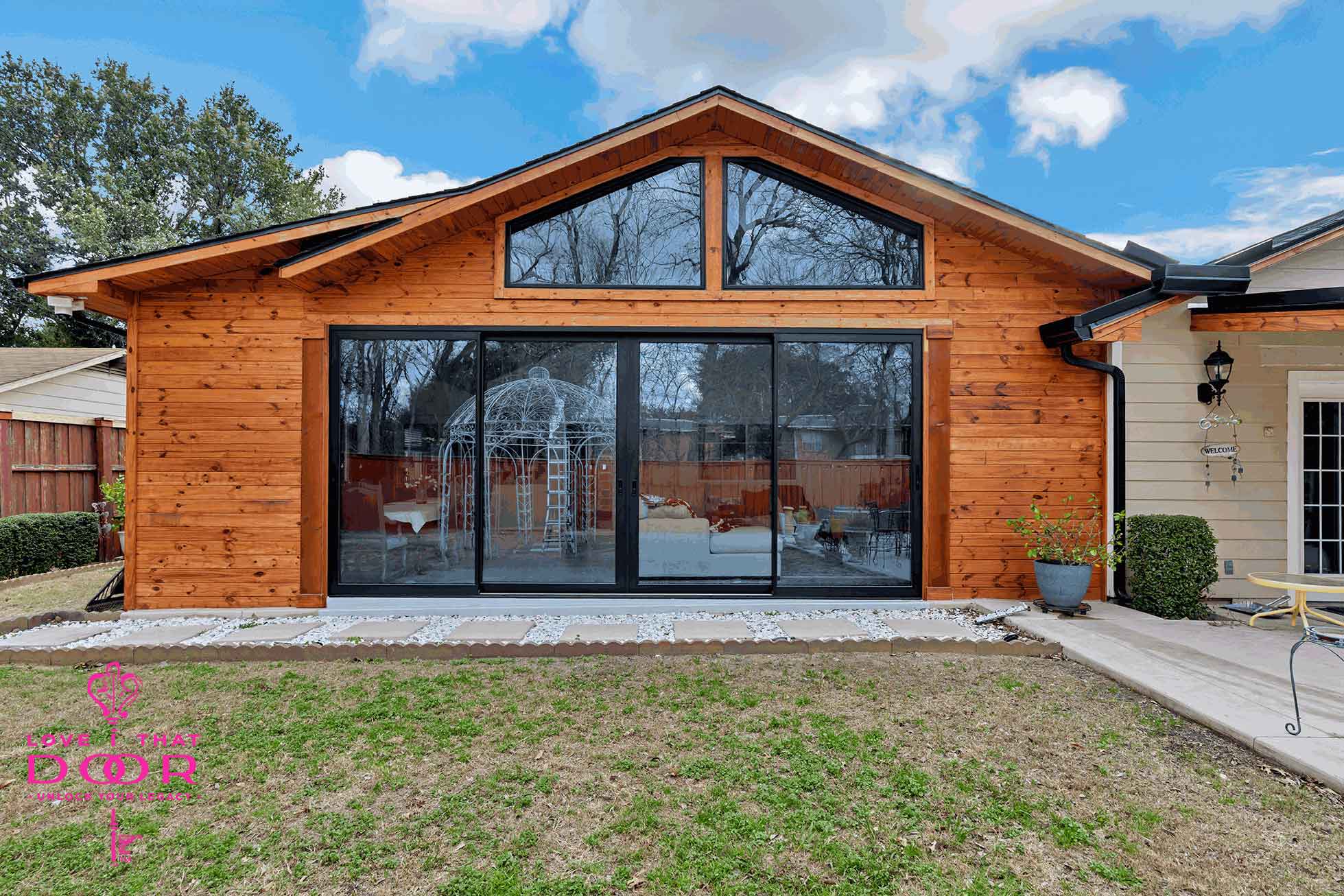
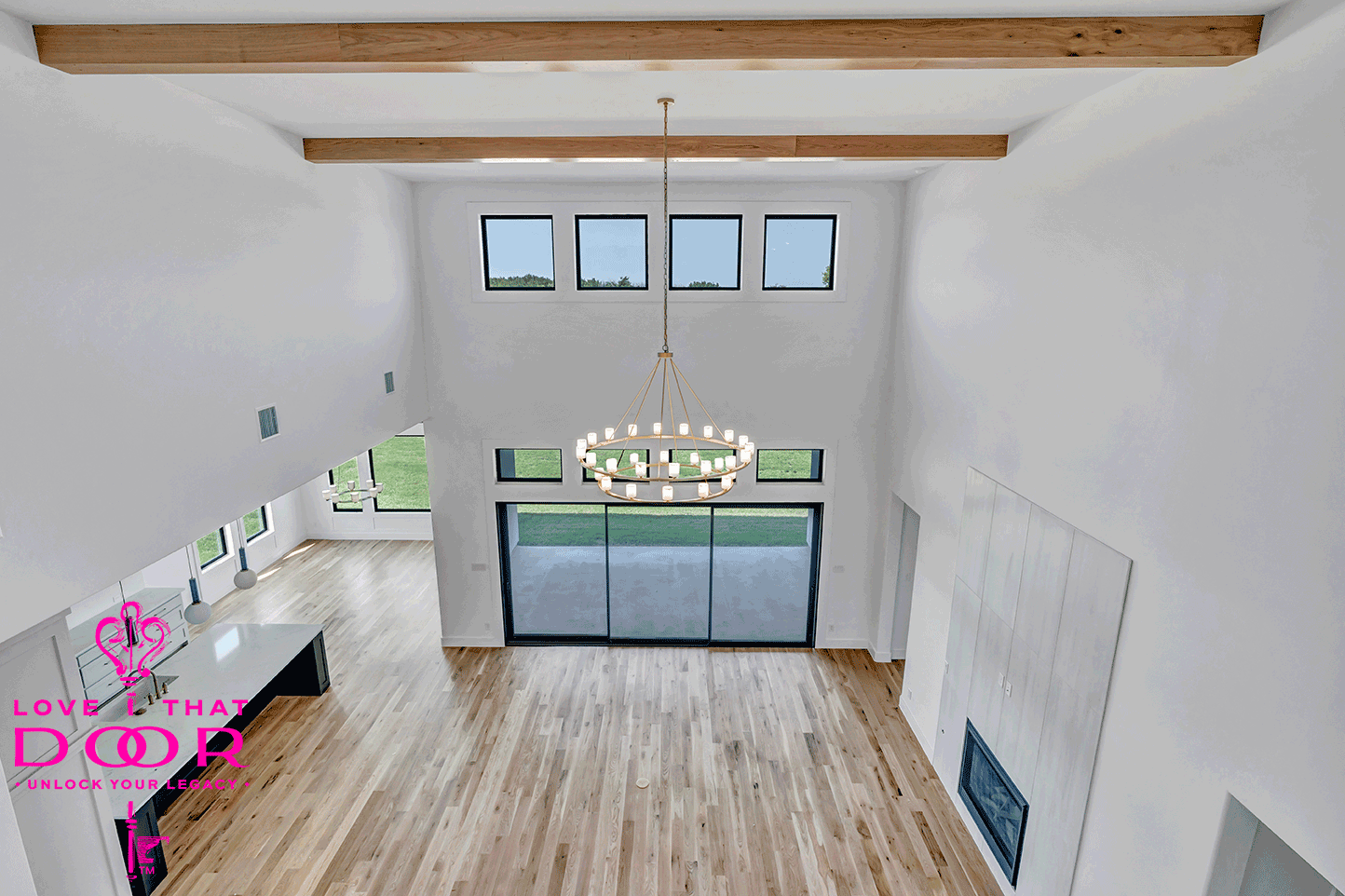
An aluminum door without a thermal break has a frame U-factor of roughly 1.5 to 2.0 — terrible insulation by any standard. The glass might be double-pane Low-E with a U-factor of 0.28, but the frame is conducting heat around the glass and into your home. The assembly rating — the number that matters — averages the two, and the frame pulls it way up.
A thermally broken aluminum frame drops the frame U-factor to 0.35 to 0.45. Now the frame and the glass are working together instead of fighting each other. The assembly U-factor improves by 30-50% — from 0.45-0.50 down to 0.28-0.32. That’s the difference the thermal break makes in the numbers.
Read Chad’s deep dive on thermal breaks for the full engineering explanation — but the short version is that the bends and air chambers engineered into the aluminum extrusion aren’t marketing. They’re measurable physics.
Glass Packages and Their Energy Impact
Ultrasmooth bottom running
The glass in your patio door matters as much as the frame. Here are the options and what they do to the ratings:
Standard Double-Pane Clear Glass: U-factor ~0.50, SHGC ~0.70. This is the baseline. It meets code in most areas but offers minimal energy performance. Not recommended for any sun-facing door in Texas.
Double-Pane with Low-E Coating: U-factor ~0.30, SHGC ~0.25-0.40 (depending on coating). This is the minimum we recommend for Texas. The Low-E coating reflects infrared heat while transmitting visible light. It’s the single most impactful upgrade you can make to your door’s energy performance.
Double-Pane with Low-E and Argon Fill: U-factor ~0.25, SHGC ~0.25-0.40. Argon gas between the panes improves insulation by about 20% compared to air-filled units. Standard on our premium patio door systems.
Triple-Pane with Low-E and Argon: U-factor ~0.18, SHGC ~0.20-0.35. The highest performance option. Necessary in extreme climates. In DFW, the additional cost of triple-pane over double-pane with argon typically isn’t justified by energy savings alone — but if your door faces direct afternoon sun across a large opening, the comfort improvement may be worth it.

Energy Star Certification for Texas
Energy Star certifies doors by climate zone. DFW falls in the South-Central zone. For a door to earn Energy Star certification in our zone, it must meet:
U-factor of 0.30 or lower
SHGC of 0.25 or lower
All of Love That Door’s aluminum patio door systems can be configured to meet or exceed Energy Star requirements. We’ll help you select the right glass package and verify the ratings with the manufacturer’s NFRC (National Fenestration Rating Council) label — the sticker that shows the actual tested U-factor, SHGC, and VT for your specific door configuration.
What the NFRC Label Tells You
Every quality door comes with an NFRC label. It looks like a white sticker with numbers in boxes. Here’s what to look for:
The U-factor box shows the whole-assembly rating — not just the glass, not just the frame. This is the number that matters for energy calculations.
The SHGC box shows the solar heat gain for the specific glass package in your door.
The VT box shows visible light transmission — important if you don’t want your living room to feel like a cave.
The label also notes whether the ratings are for the standard size or your specific size. Standard-size ratings are slightly optimistic — your door may be slightly different. For large custom openings, ask for a project-specific simulation.
Condensation Resistance: The Texas Humidity Factor
Ultrasmooth bottom running
There’s a fourth number on the NFRC label that matters more in Texas than in Arizona: Condensation Resistance (CR). It’s rated from 1 to 100. Higher is better.
In DFW, we get humidity. When cold air-conditioned interior air meets a door frame that’s been cooled by contact with hot humid exterior air, condensation forms on the interior surface. Over time, that condensation causes paint failure, wood rot in adjacent framing, and — in worst cases — mold.
A thermally broken frame dramatically improves CR because the interior surface of the frame stays closer to room temperature. Less temperature differential means less condensation. Our testing standards include humidity cycling specifically designed to stress-test condensation resistance in conditions that match Texas summers.
How to Compare Doors Across Manufacturers
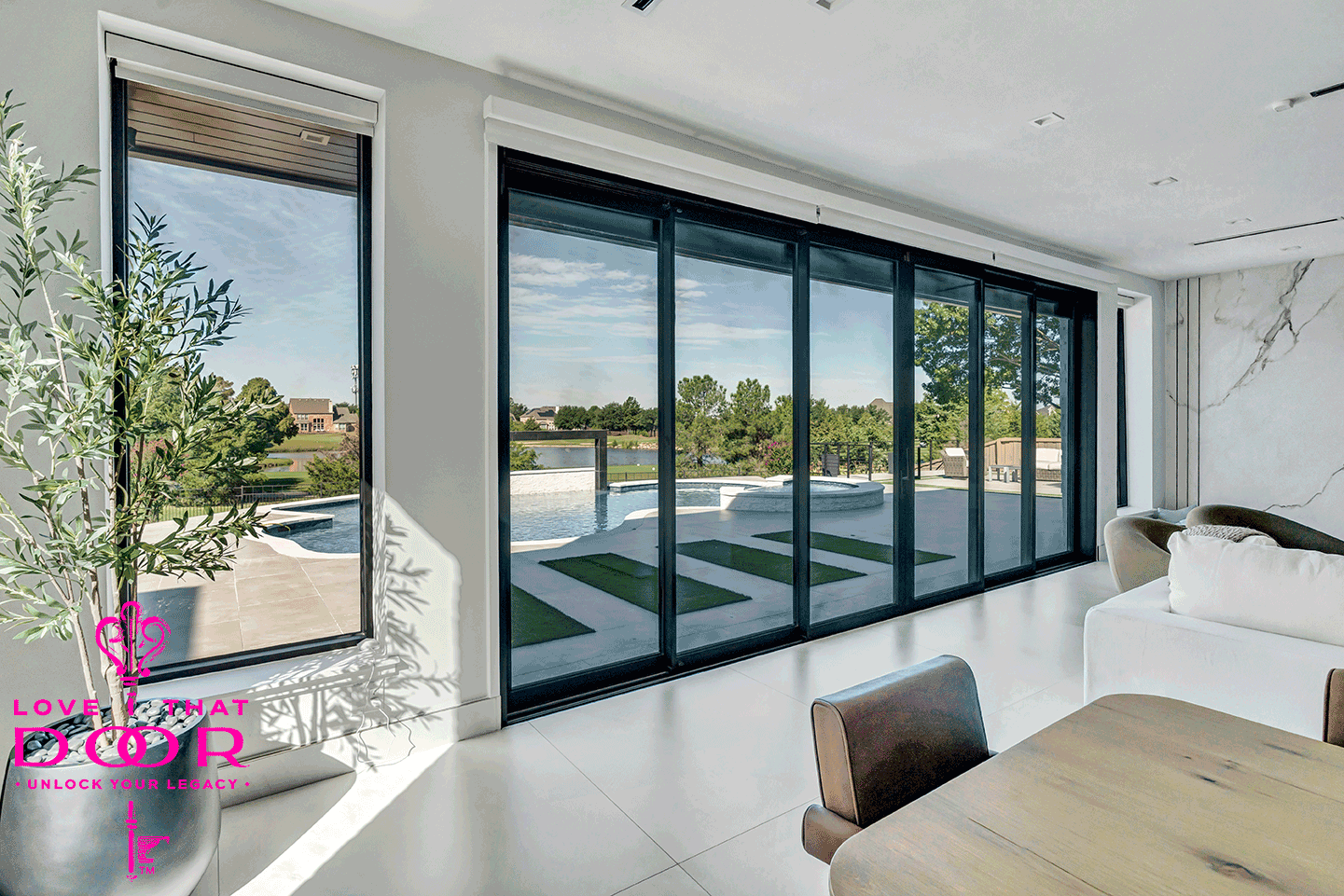
Different manufacturers report energy ratings differently. Some use standard-size simulations. Some use actual test results. Some report glass-only ratings and call them “door ratings.” Here’s how to compare apples to apples:
Ask for the NFRC label or a Certified Products Directory (CPD) number for the exact configuration you’re buying — your size, your glass, your frame finish.
Confirm the U-factor is the whole-assembly rating — frame, glass, edge spacers, everything.
Compare SHGC at the same VT level. A door with SHGC of 0.20 and VT of 0.35 isn’t necessarily better than a door with SHGC of 0.28 and VT of 0.55. It depends on whether you prioritize heat rejection or natural light.
Ask for the CR rating. If the manufacturer can’t provide it, assume their door hasn’t been tested for condensation performance.
The aluminum buyer’s guide walks through the full comparison framework, including questions to ask every manufacturer you’re considering.
Real-World Performance: What the Numbers Mean in Your Home
Ultrasmooth bottom running
A patio door with U-factor of 0.28 and SHGC of 0.25 — properly installed in a DFW home with the opening facing south — will save roughly $200-400 per year in cooling costs compared to a non-thermally-broken door with U-factor of 0.50 and SHGC of 0.70.
Over 20 years, that’s $4,000 to $8,000 — enough to pay for the door’s premium over a budget alternative, with thousands left over.
But the numbers don’t capture the comfort difference. A non-thermally-broken aluminum door in August radiates heat you can feel standing next to it. The floor in front of the door gets warm. The blinds get hot. Your AC runs longer. With a properly engineered door, none of that happens. The room stays comfortable right up to the glass.
FAQ
Q: What’s a good U-factor for a patio door in Texas?
A: 0.30 or lower. This requires a thermally broken aluminum frame and double-pane Low-E glass. U-factors below 0.25 are achievable with premium glass packages and well-engineered thermal breaks.
Q: Should I get triple-pane glass for my patio door?
A: In DFW, triple-pane is typically not cost-justified by energy savings alone. The incremental improvement over double-pane with argon is modest. However, for extremely large openings or doors facing direct afternoon sun, the comfort improvement may be worth the cost. We can model both options for your specific opening and orientation.
Q: Do aluminum doors perform worse than vinyl or fiberglass for energy efficiency?
A: Non-thermally-broken aluminum doors perform significantly worse than vinyl or fiberglass — aluminum is a much better conductor of heat. Thermally broken aluminum doors with quality glass packages perform competitively with premium vinyl and fiberglass products, while offering significantly larger possible opening sizes, thinner sightlines, and better structural performance.
Q: How do I verify the energy ratings on a door I’m considering?
A: Look for the NFRC label on the door. Ask for a copy of the test report or the CPD number to verify the ratings independently at nfrc.org. If the manufacturer can’t provide this, the ratings are likely simulated or estimated rather than tested.
Q: Will energy-efficient glass make my room too dark?
A: Modern Low-E coatings are spectrally selective — they block infrared heat while transmitting most visible light. A door with SHGC of 0.25 can still have VT of 0.50 or higher, meaning over half of visible light passes through. The room won’t be dark, but it will be noticeably cooler.