

Steel Doors vs Fiberglass: What Actually Adds More Value to Your DFW Home?


Chad Crenshaw
I’ve spent 25 years engineering doors in Texas, and the “steel vs. fiberglass” question is the one I hear most often from DFW homeowners who are serious about value. Not the cheapest option — the one that actually pays off.
Here’s the short answer: steel doors add more value to a DFW home in every category that matters — lifespan, energy performance, curb appeal, resale value, and long-term maintenance cost. But the *why* behind each of those is worth understanding before you write a check.
Lifespan: Which door material actually lasts longer in Texas?
Steel wins here, and it’s not close.
A 10-gauge cold-rolled steel door built with a polyurethane foam core — the kind we manufacture — will last 30 to 50 years in the DFW climate. The steel doesn’t warp, doesn’t rot, and doesn’t delaminate. The powder-coat finish protects against corrosion even in humidity.
Fiberglass doors have a real-world lifespan of 15 to 25 years in Texas. The gel coat fades. The fiberglass skin can delaminate from the foam core after years of thermal cycling — 105°F afternoons followed by 45°F winter nights create expansion and contraction cycles that eventually separate the layers.
I’ve replaced enough 15-year-old fiberglass doors where the skin was literally peeling off to know this isn’t theoretical.
Energy Efficiency: Which door keeps the AC bill lower?
Both can perform well — but they achieve it differently, and fiberglass has a hidden vulnerability.
A steel door with a polyurethane foam core delivers an R-value in the same range as a quality fiberglass door. The difference is what happens over time. Fiberglass skins can separate from the core, creating air gaps inside the door panel itself — gaps you can’t see but your AC bill will notice.
Steel doors with a continuous foam core don’t have that failure mode. The foam fills the entire cavity and bonds to the steel, so there’s nothing to separate.
The real efficiency difference comes down to sealing. Steel doors maintain tighter weatherstripping contact because the frame stays perfectly straight decade after decade. Fiberglass doors can develop subtle warping that breaks the seal.
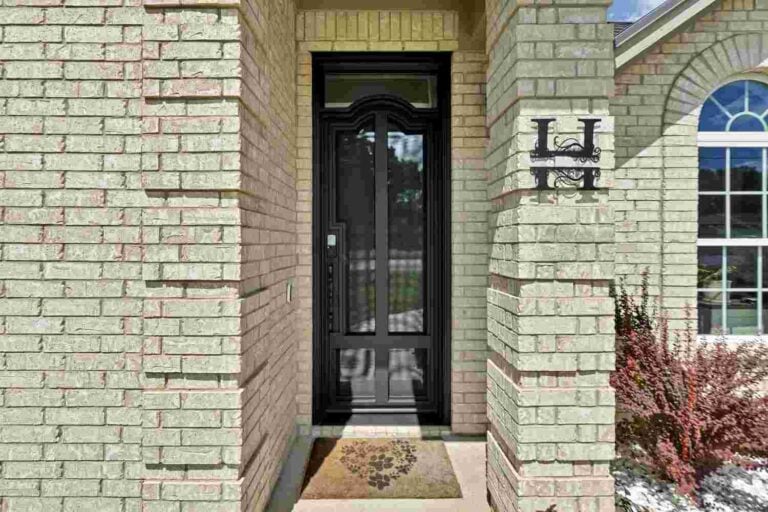
Curb Appeal: What do home buyers actually respond to?
Here’s something I’ve learned from watching thousands of DFW homes sell: a custom steel entry door changes how people perceive the entire house.
Steel doors have a visual mass and presence that fiberglass can’t replicate. The thickness of 10-gauge steel — visible in the door edge, the weight of the swing, the way light hits a powder-coat finish — signals quality the moment someone walks up to the house.
Fiberglass doors, even good ones, look like they’re *imitating* something. Steel doors look like the thing itself.
Curb appeal translates directly to resale value. Real estate agents in DFW will tell you: a custom steel entry door sells the house before the buyer walks inside.
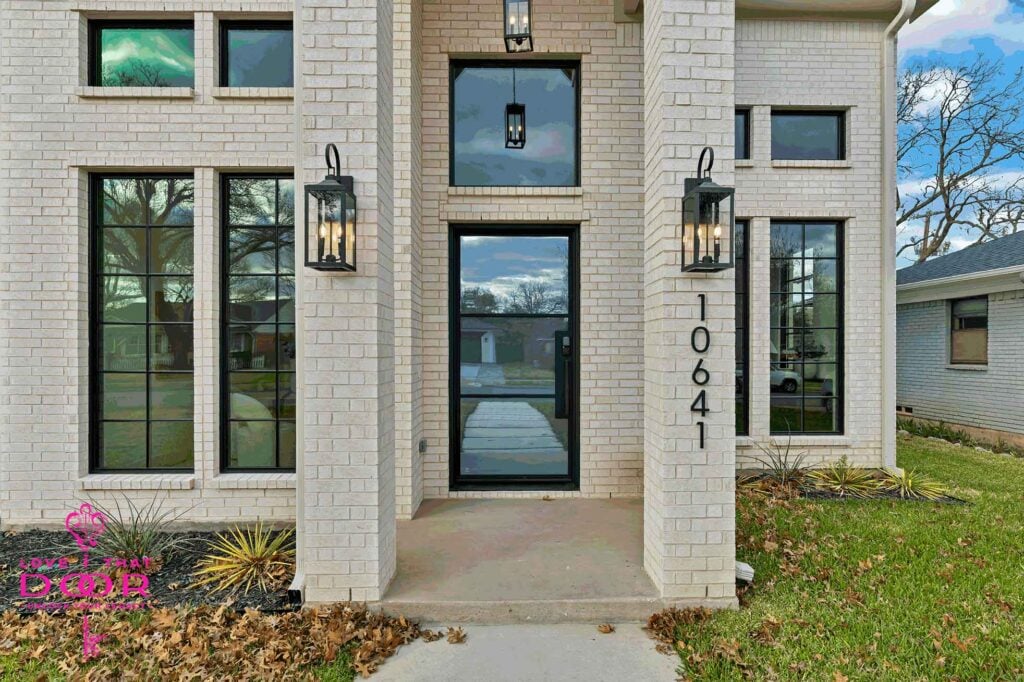
Resale Value: What does the ROI data actually say?
Entry door replacement consistently ranks in the top 3 home improvement projects for ROI in Remodeling Magazine’s annual Cost vs. Value report — typically recouping 65% to over 90% of the investment.
But the report averages all door types together. A custom steel door in the DFW market outperforms that average. Why? Because DFW buyers recognize the material. They know a steel door means the house was built or upgraded with quality in mind.
Fiberglass doors, even expensive ones, don’t carry the same signal. A buyer sees a fiberglass door and thinks “standard builder-grade.” They see a custom steel door and think “this owner invested in the house.”
Maintenance: Which door costs less to own over 20 years?
Steel doors with a quality powder-coat finish require essentially zero maintenance beyond occasional cleaning. The finish doesn’t fade. The door doesn’t warp. The seals stay tight.
Fiberglass doors need periodic re-coating as the gel coat degrades — especially on south-facing and west-facing exposures in Texas where UV exposure is relentless. I’ve seen fiberglass doors that looked 10 years old after 3 years of direct afternoon sun.
When you spread the purchase price across the actual lifespan, a $7,000 steel door that lasts 40 years costs you $175 per year. A $4,000 fiberglass door that lasts 20 years costs you $200 per year — and that’s before factoring in the maintenance and the lower resale value.
The cheaper door often costs more.
Schedule your free consultation and I’ll walk you through the numbers in person at any of our four DFW showrooms. Unlock Your Legacy.