

What Happens to a Dallas Energy Bill After Switching to Thermal-Break Aluminum


Chad Crenshaw
I have seen it dozens of times: a DFW homeowner swaps an old, uninsulated patio door for a thermally broken aluminum system, and the next July their cooling bill comes in noticeably lower than the year before. It is not magic and it is not a marketing line — it is physics. The heat that used to ride the metal frame straight into the living room now has to fight through engineered air gaps, and the glass that used to cook the room now reflects the sun before it gets in.
I have spent my career as an engineer and a factory owner, and I keep our doors honest with data, not adjectives. When you look at a Dallas energy bill after the switch, you are seeing fewer degrees of solar heat gain and less work for the air conditioner. For the full breakdown of how that money stays in your pocket, the aluminum patio door energy efficiency page runs through the numbers.
Why Does the Frame Matter to a Dallas Energy Bill?
Most homeowners think the glass is the only thing stopping heat, but the frame is where a cheap patio door leaks the most. Bare aluminum conducts heat almost effortlessly, which turns the frame into a pipe for the sun.
- A bare aluminum frame transfers outdoor heat directly to the interior.
- A thermal break adds engineered bends in the extrusion that create air gaps — geometry, not a glued-in insert.
- Those air gaps slow the heat, so the frame stops conducting.
Put a hand on a store-brand aluminum frame on an August afternoon. Then put a hand on a thermally broken aluminum frame — it stays cool. That difference is measurable on a cooling bill because every degree the frame does not add is a degree the air conditioner does not have to remove.
What Actually Is the Thermal Break?
I want to be clear about this because a lot of the industry gets it wrong in the same way. A thermal break in aluminum patio doors is not a plastic or polyamide strip inserted later.
- It is a set of bends engineered directly into the aluminum extrusion.
- Those bends create air spaces inside the profile that slow heat movement.
- Because it is milled into the design, it cannot delaminate or rattle out.
That design decision is why our thermal-break aluminum holds up in Texas while glued-in inserts eventually fail. You are not relying on a part staying stuck — you are relying on permanent geometry. Every aluminum patio door from Love That Door is built this way.
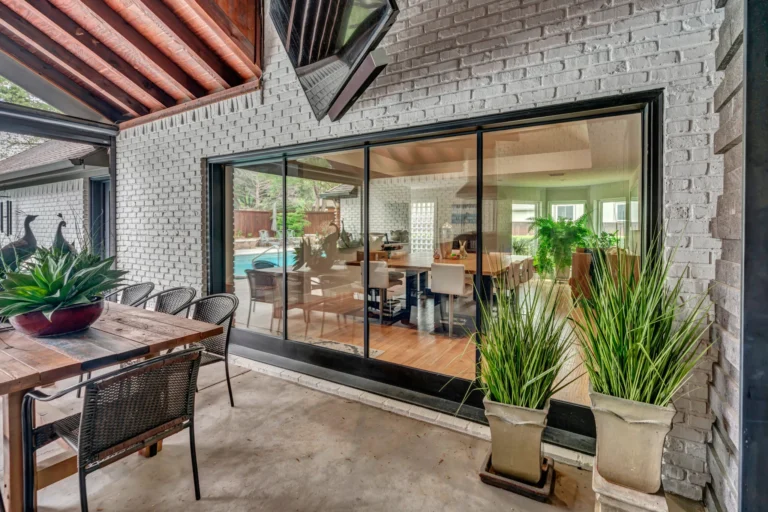
How Do Argon and Low-E Cut the Cooling Load?
The frame stops conduction, but the glass has to do its part too, and that is where argon and Low-E come in.
- Low-E reflects the sun’s radiant heat back outside before it enters the room.
- Argon gas is denser than air, so it slows heat crossing the gap between panes.
- The 1-inch unit keeps the interior surface noticeably cooler to the touch.
Glass and frame working together is what moves the needle on a Dallas bill. They handle conduction and radiant heat together so the sun has no easy path into your home. It is the system we engineered so nothing does all the work alone.
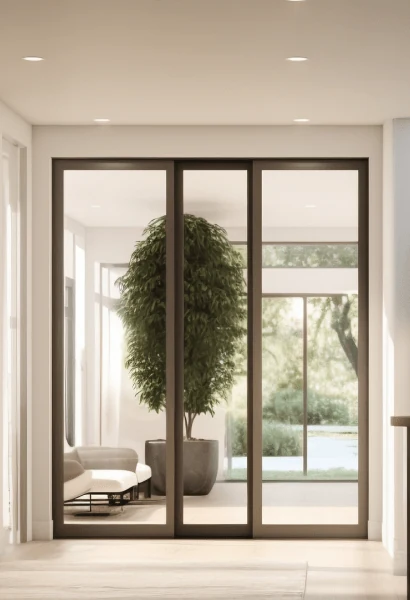
What Should a DFW Homeowner Expect on an Energy Bill?
I do not promise a specific percentage on every bill, because every house is different — orientation, window count, and how well the rest of the home is sealed all matter. But the direction is consistent and repeatable.
- West-facing doors remove the worst of the afternoon solar gain.
- A thermally broken frame removes the frame itself as a heat source.
- Low-E and argon keep the glass from radiating heat back onto you.
When you replace a door with a heat-conducting frame and uncoated glass, the July air conditioner runs fewer cycles. Homeowners tell me their rooms near the door finally hold the set temperature. The energy efficiency numbers on this door system back that up.
Why Is Solar Heat Gain Worse in a Dallas Summer?
Dallas summers are long and relentless, and the sun hits south and west-facing glass with real force. The sharper the angle and longer the exposure, the more heat a plain glass door lets in.
- A west-facing patio door can soak for hours in the afternoon sun.
- Low-E coating bounces much of that heat back outside.
- Argon stops the heat that does hit the glass from crossing over.
Without these features, a patio door turns into a radiant heater right when your air conditioner is working hardest. That is why the glass package matters in Texas. It is a big reason these are the best aluminum patio doors for DFW heat.
Does the Same Door Help in a DFW Winter?
Yes — and this is the part homeowners never expect. The same thermal break and sealed glass that stop summer heat from coming in also keep heated air from escaping on a cold front.
- The air gaps in the frame slow heat loss during cooler weather.
- Argon keeps the interior side of the glass warmer.
- The sealed 1-inch unit stops cold drafts at the doorway.
So the door that lowers your July cooling bill also cuts the heating load in January. It is not a summer-only or winter-only solution — it is a year-round seal. That is what owning the factory lets Love That Door deliver: a thermally broken aluminum door engineered for the Texas climate.
How Does Love That Door Guarantee the Performance?
We guarantee it the same way we prove everything else — by testing it and building the frame and glass as one system.
- The thermal break is engineered into every frame profile.
- The argon-filled, Low-E, 1-inch glass is sealed into the frame.
- The exterior is sealed with Polyblend ceramic sanded caulk — not silicone.
Because Love That Door aluminum doors are built factory-direct and installed by our own crews, the savings you counted on at the showroom are the savings you get on wall. Schedule your free consultation and see how a thermal-break aluminum door changes your Dallas energy bill.
FAQ
Will a thermal-break aluminum door lower my Dallas energy bill?
In most cases, yes. A thermally broken frame paired with Low-E and argon glass cuts solar heat gain, so the air conditioner works less in a Texas summer.
What actually is a thermal break in an aluminum door?
It is a set of bends engineered into the aluminum extrusion that create air gaps. It is part of the frame’s geometry, not a polymer or polyamide insert.
How do argon and Low-E help in Texas heat?
Low-E reflects the sun’s heat back outside, and argon gas, being denser than air, slows the heat crossing the gap between the glass panes.
What glass package comes standard on Love That Door aluminum doors?
A 1-inch double-paned insulated unit that is argon-filled, Low-E coated, and tempered, built into the thermally broken frame.
Does the thermal break help in a DFW winter too?
Yes. The same air gaps slow heat loss and the sealed glass stops drafts, so the door cuts both cooling and heating loads.
How does Love That Door make sure the savings are real?
By building the frame and glass as one unit, testing the doors, and sealing the exterior with Polyblend ceramic sanded caulk so nothing leaks.