

Do Aluminum Patio Doors Make Your House Hotter in Texas? | The Truth

Home » Do Aluminum Patio Doors Make Your House Hotter in Texas? | The Truth
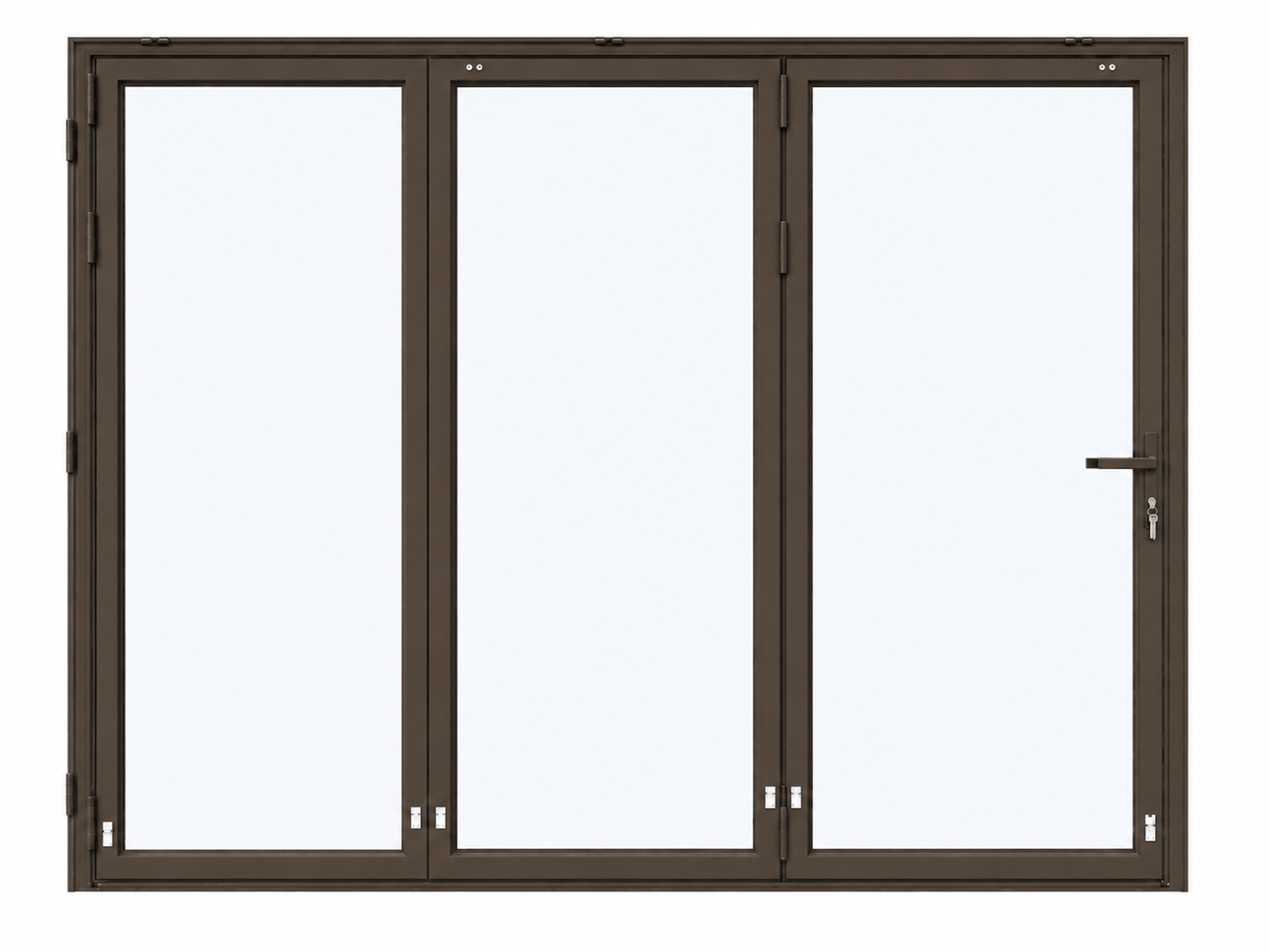
No, aluminum patio doors do not make your house hotter — as long as they’re engineered with true thermal breaks. The key is how the break is built: in a properly engineered aluminum door, the thermal separation comes from strategic bends in the extrusion geometry itself, not from a plastic strip wedged between metal pieces. This distinction is everything when you’re talking about Texas summers.
Why do people think aluminum
doors make homes hotter?
Love That Door®

Because they used to — and the misconception stuck.
Aluminum is a highly conductive metal. In older aluminum doors (1980s–2000s), the frame was a solid piece of aluminum running from the outside straight through to the inside. On a 105°F Dallas afternoon, that frame became a thermal bridge — a direct heat highway into your air-conditioned living room.
That’s the origin of the “aluminum makes your house hot” reputation. It was true 30 years ago, but it’s not true with modern thermally broken aluminum doors.
Book your FREE in-home or showroom consultation today—we'll measure your space, explore custom designs, and bring your vision to life!
Get a FREE quote! Share your measurements or a photo of your space, and our design experts will send you a personalized price estimate.
How does a thermal break in
an aluminum door actually work?
Love That Door®
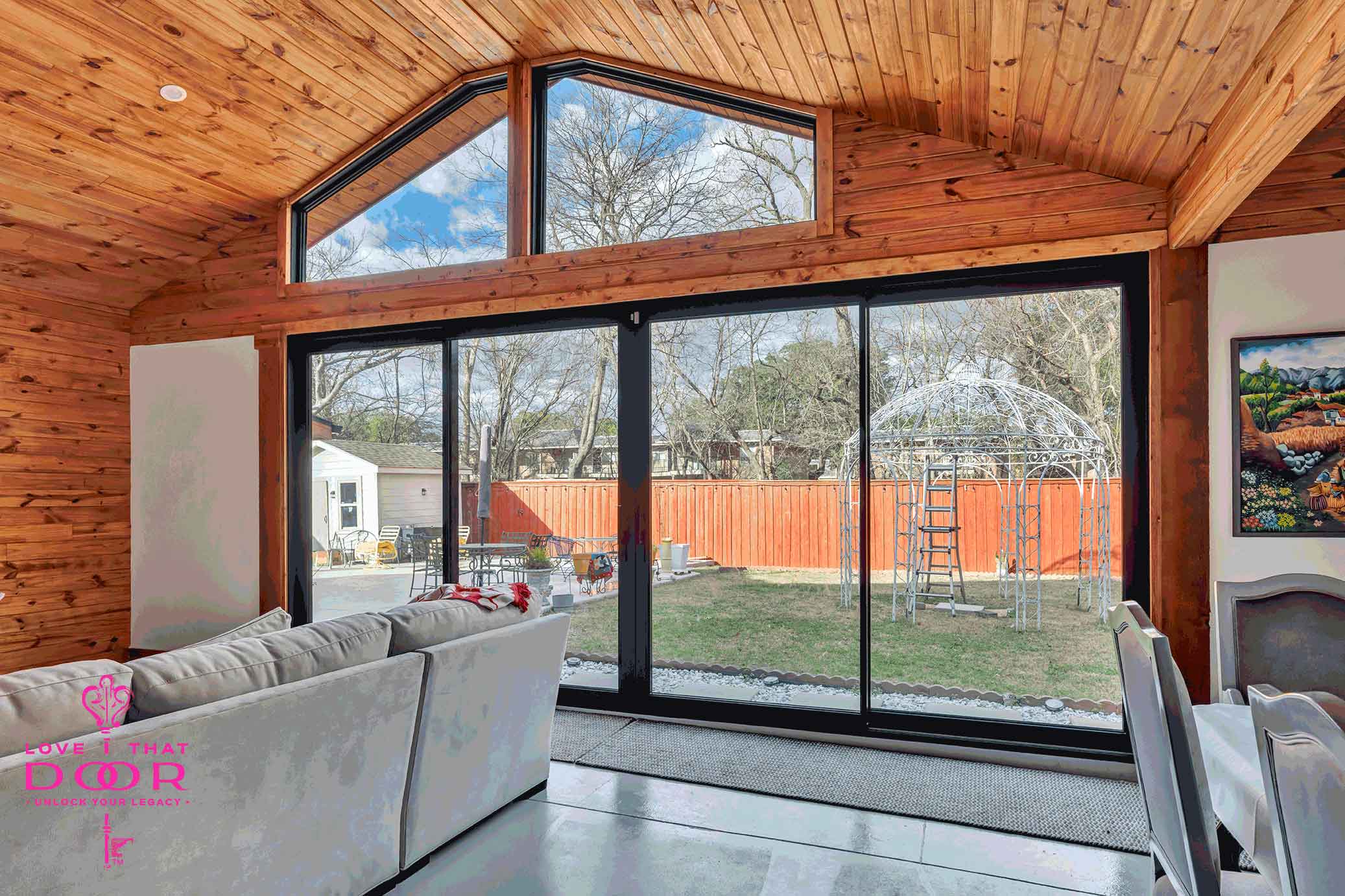
A real thermal break in an aluminum door doesn’t come from a polymer strip — it comes from the extrusion geometry itself.
The aluminum frame is extruded as a single profile with a strategically designed gap. The inner and outer sections are connected only by thin aluminum bridges, and the cavity created by the bends in the extrusion is what breaks the heat path.
Think of it like this: instead of building two separate aluminum pieces and gluing them together with plastic, the entire frame is one continuous extrusion whose shape creates the thermal separation. Heat traveling through the exterior aluminum hits the cavity — essentially dead air space engineered into the profile — and can’t continue through to the interior side.
Our thermally broken aluminum doors use this geometric thermal break design, which outperforms plastic-isolator alternatives in both durability and long-term thermal performance.
Do aluminum patio doors meet
Texas energy code requirements?
Love That Door®
Yes. Thermally broken aluminum patio doors equipped with Low-E insulated glass meet and exceed Texas energy code requirements, including IECC 2021 standards adopted by most DFW municipalities.
The energy performance of an aluminum door depends on two factors working together: the thermal break in the frame and the glass package. See the full breakdown of aluminum door energy efficiency factors.
A properly engineered aluminum bifold or sliding door with double-pane Low-E glass will deliver a U-factor of 0.30 to 0.40 — well within code requirements and, more importantly, comfortable in a Texas living room with afternoon sun hitting the glass.
Book your FREE in-home or showroom consultation today—we'll measure your space, explore custom designs, and bring your vision to life!
Get a FREE quote! Share your measurements or a photo of your space, and our design experts will send you a personalized price estimate.
What happens to aluminum patio
doors in 100°F+ Texas summers?
Love That Door®
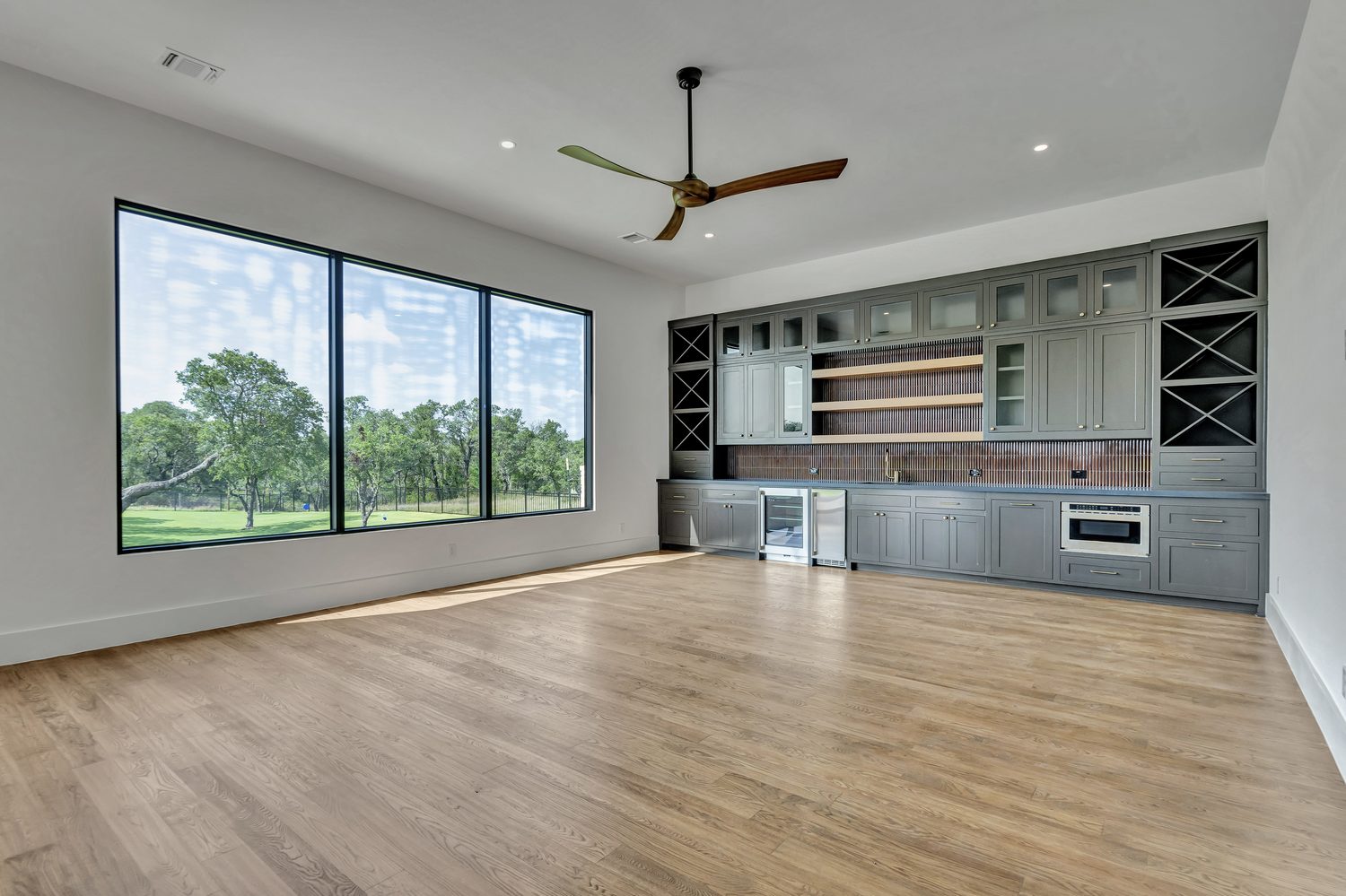
They perform exactly as engineered — because aluminum doesn’t warp.
This is the advantage aluminum holds over vinyl in extreme heat. Vinyl frames can soften and warp when surface temperatures exceed 140°F — which happens regularly on a dark-framed patio door facing Texas afternoon sun. Aluminum doesn’t warp, bend, or degrade regardless of temperature.
The thermal break handles the heat transfer. The aluminum itself handles the structural demands. Read our full aluminum patio door buyer’s guide for a complete comparison.
How much can thermally broken
aluminum doors save on energy bills?
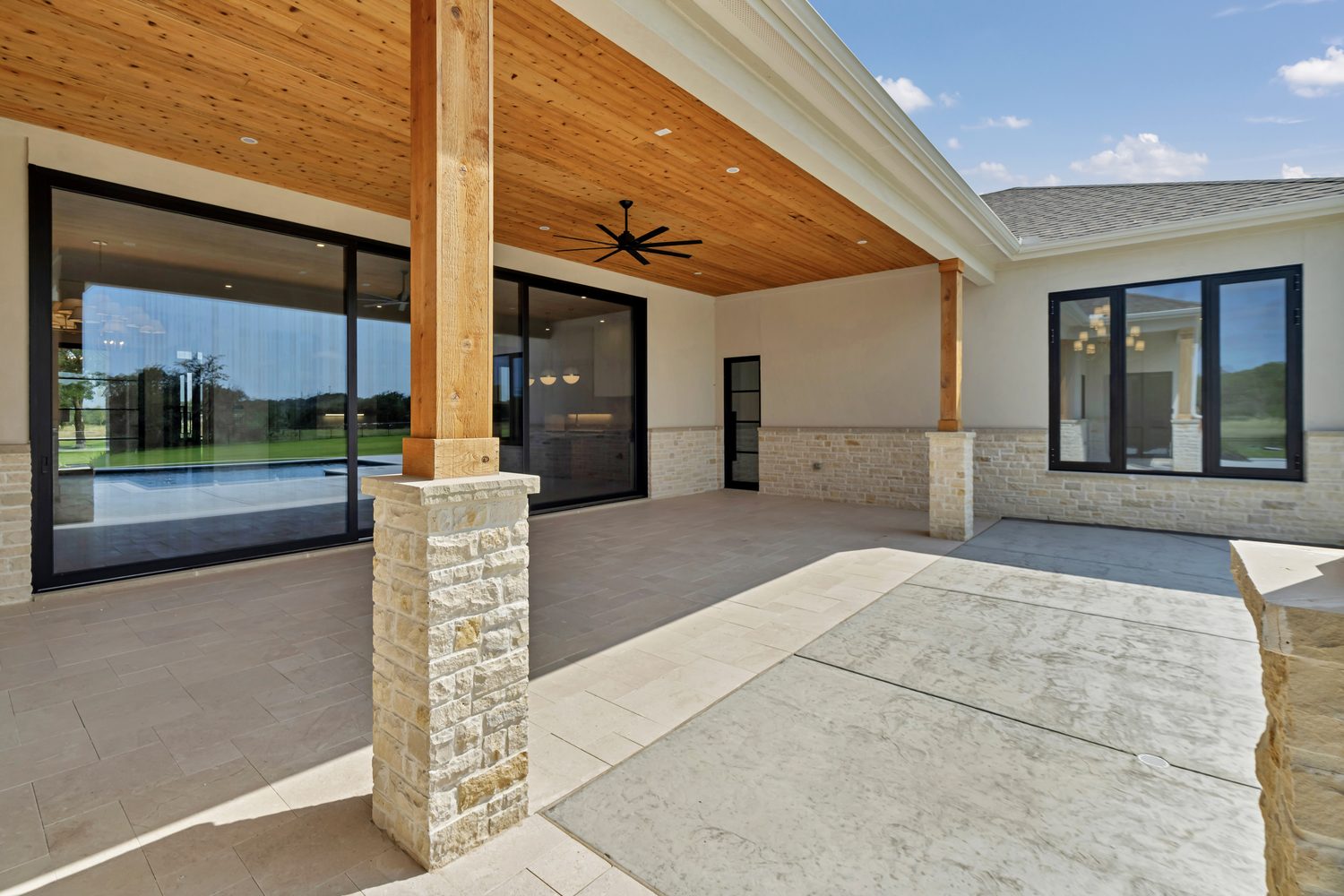
Homeowners replacing single-pane sliding doors or older non-broken aluminum frames with modern thermally broken aluminum patio doors typically see a 10–18% reduction in cooling costs for the rooms adjacent to those openings.
The savings come from eliminating the thermal bridge. In an old aluminum door, the metal frame itself was conducting exterior heat directly into your home 24/7 during summer. Break that bridge and you cut the conduction path.
The glass upgrade matters too. Going from clear single-pane to Low-E insulated glass in the same opening typically doubles the energy performance improvement. Avoid these common patio door mistakes that can undermine your efficiency gains.
How do bifold door hardware and
seals affect energy performance?
Love That Door®
The hardware matters more than most homeowners realize — especially on bifold systems where multiple panels create multiple potential air-leakage points.
German-engineered hardware on a bifold door doesn’t just make it open and close smoothly. The precision of the locking points, the compression of the seals at every panel joint, and the adjustable hinges that let you dial in the exact seal pressure — all of it contributes to energy performance.
A bifold door with sloppy hardware can lose as much conditioned air through panel gaps as it gains in thermal break efficiency. The hardware and the thermal break have to work together.
Schedule your free consultation to see thermally broken aluminum patio doors in action at any of our four DFW showrooms.
Expert Insight

From Chad Crenshaw, Founder & Chief Engineer:
“I’ve seen homeowners spend $15,000 on a patio door and get it installed by a handyman with a tube of silicone. That door will fail — not because of the product, but because nobody who understood it was there when it went in. We build the door and we install the door. Same team, same standard.”
Book your FREE in-home or showroom consultation today—we'll measure your space, explore custom designs, and bring your vision to life!
Get a FREE quote! Share your measurements or a photo of your space, and our design experts will send you a personalized price estimate.
Frequently Asked
Questions
01.
Q: Do aluminum doors really stay cool to the touch inside during summer?
A: Yes — the interior side of a properly thermally broken aluminum door stays within a few degrees of your indoor temperature. The geometric break in the extrusion prevents heat from conducting through to the interior surface.
02.
Q: Are aluminum patio doors more expensive than vinyl?
A: They are, and for good reason. Aluminum doors last 2-3 times longer than vinyl in Texas, won’t warp in extreme heat, and offer much larger glass panels because the frame is stronger. The higher upfront cost pays back in lifespan and performance.
03.
Q: Can aluminum patio doors handle Texas hail and storms?
A: Yes — and this is another area where aluminum outperforms vinyl. Aluminum frames don’t crack on impact. Combined with impact-rated glass, an aluminum door system provides superior storm protection. See our aluminum door testing standards for details
04.
Q: What’s the difference between a polymer thermal break and a geometric thermal break?
A: A polymer thermal break uses a plastic strip inserted between two separate aluminum extrusions. A geometric thermal break is engineered into the extrusion shape itself — bends in the aluminum create the cavity that stops heat transfer. Geometric breaks don’t degrade or separate over time the way polymer inserts can.
05.
Q: Do I need special glass for aluminum patio doors in Texas?
A: Low-E insulated (double-pane) glass is strongly recommended for any patio door in DFW. The combination of a thermally broken aluminum frame and Low-E glass is what delivers the full energy performance. Single-pane glass undermines everything the frame’s thermal break is doing.
Book your FREE in-home or showroom consultation today—we'll measure your space, explore custom designs, and bring your vision to life!
Get a FREE quote! Share your measurements or a photo of your space, and our design experts will send you a personalized price estimate.
Get a free quote
REQUEST A QUOTE
Ready to Elevate Your Home with Custom Doors and Windows?
Fill out your contact details and let our design experts guide you through the process:
- Free in-home consultation tailored to your needs.
- Rough measurements and custom design for a perfect fit.