


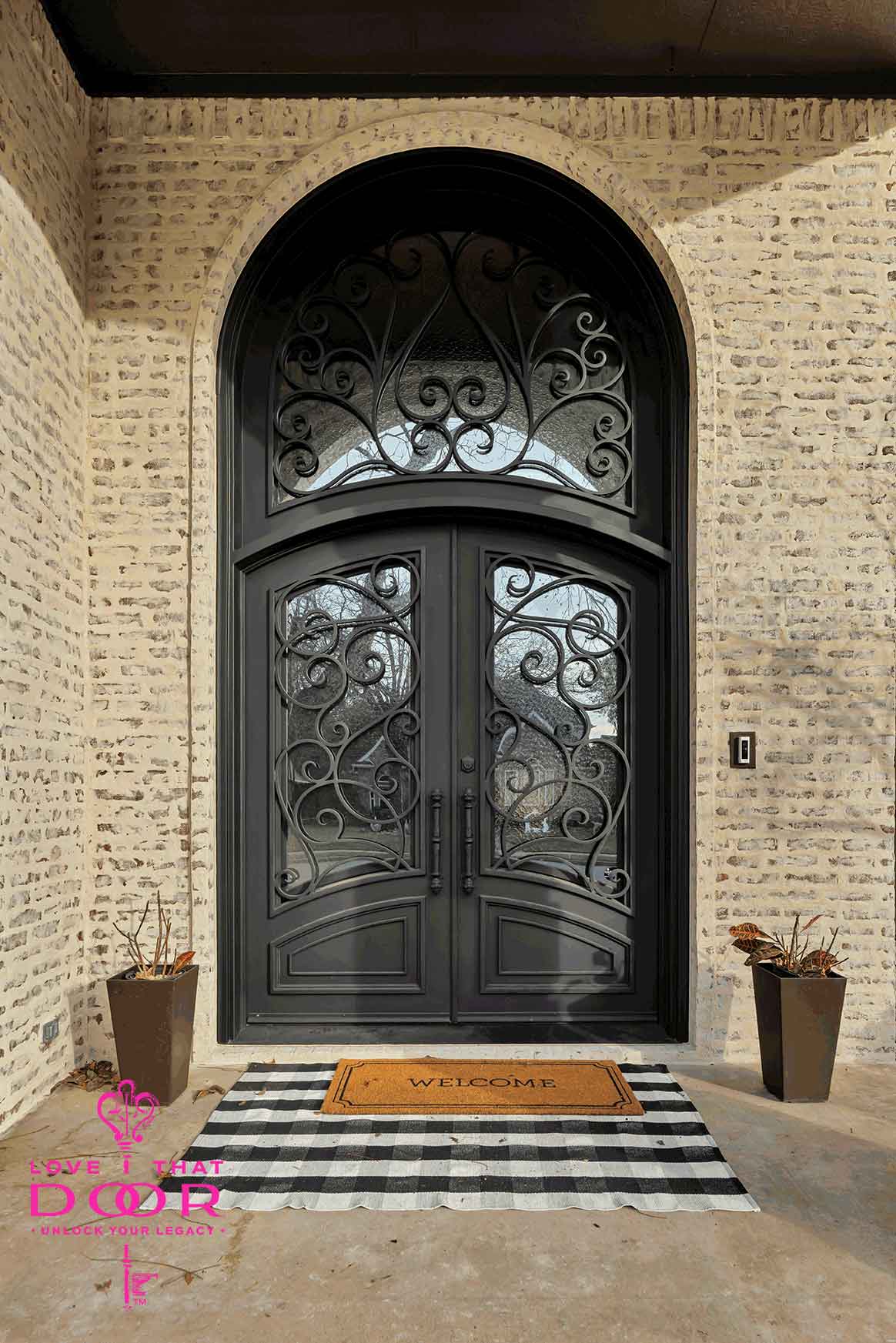
Your iron door can weigh 400 pounds or more. Every time it opens and closes, that weight hangs on your hinges and cycles through your lock mechanism. If the hardware isn’t engineered for the job, failure is not a question of if — it’s a question of when.
Why Hardware Makes or Breaks an Iron Door
Iron and steel doors are massive — often 2-3 times heavier than a standard fiberglass or wood entry door. That weight puts incredible stress on hinges, locksets, and strike plates day after day. Cheap hardware uses thin castings, weak springs, and low-grade fasteners that weren’t designed for this kind of load.
I’ve seen doors sagging after six months because the builder spec’d residential-grade butt hinges. I’ve seen lock cylinders seize up because the tolerances were too loose. When hardware fails on an iron door, you’re not just dealing with an annoyance — you’re dealing with a security risk and a door that may not close or lock properly.
The right hardware doesn’t just survive this environment; it makes the door feel effortless. One-finger operation on a 400-pound door isn’t magic — it’s engineering. And it starts with the hinges.
Hinges — The Foundation
Love That Door®

Hinges carry the entire weight of the door slab, so their design dictates how the door moves over its lifetime. For iron and steel doors, ball-bearing hinges are non-negotiable. Unlike cheap plain-bearing hinges, ball-bearing hinges use hardened steel balls between the knuckles to reduce friction and prevent metal-on-metal wear.
Here’s what matters when you’re evaluating hinges:
- Weight capacity — A typical residential hinge might be rated for 200-300 pounds. Our heavy-duty hinges are rated for 400+ pounds per door leaf.
- Number of hinges — Heavier doors need more points of attachment. We use four or more hinges on our largest doors to distribute the load evenly.
- Adjustable vs. fixed — Adjustable hinges let you fine-tune the door’s position without pulling out shims — that means a perfect reveal and easier long-term maintenance.
- Material and finish — Stainless steel and solid brass hinges resist corrosion and won’t rust through, even on a door that faces the Texas sun and humidity.
At Love That Door, we don’t cut corners on hinges. Every iron door we install gets heavy-duty ball-bearing hinges sized to the door’s actual weight. When you’re swinging a steel door that’s 8 feet tall and 42 inches wide, that foundation matters.
Book your FREE in-home or showroom consultation today—we'll measure your space, explore custom designs, and bring your vision to life!
Get a FREE quote! Share your measurements or a photo of your space, and our design experts will send you a personalized price estimate.
Lock Systems — More
Than Just Security
Love That Door®
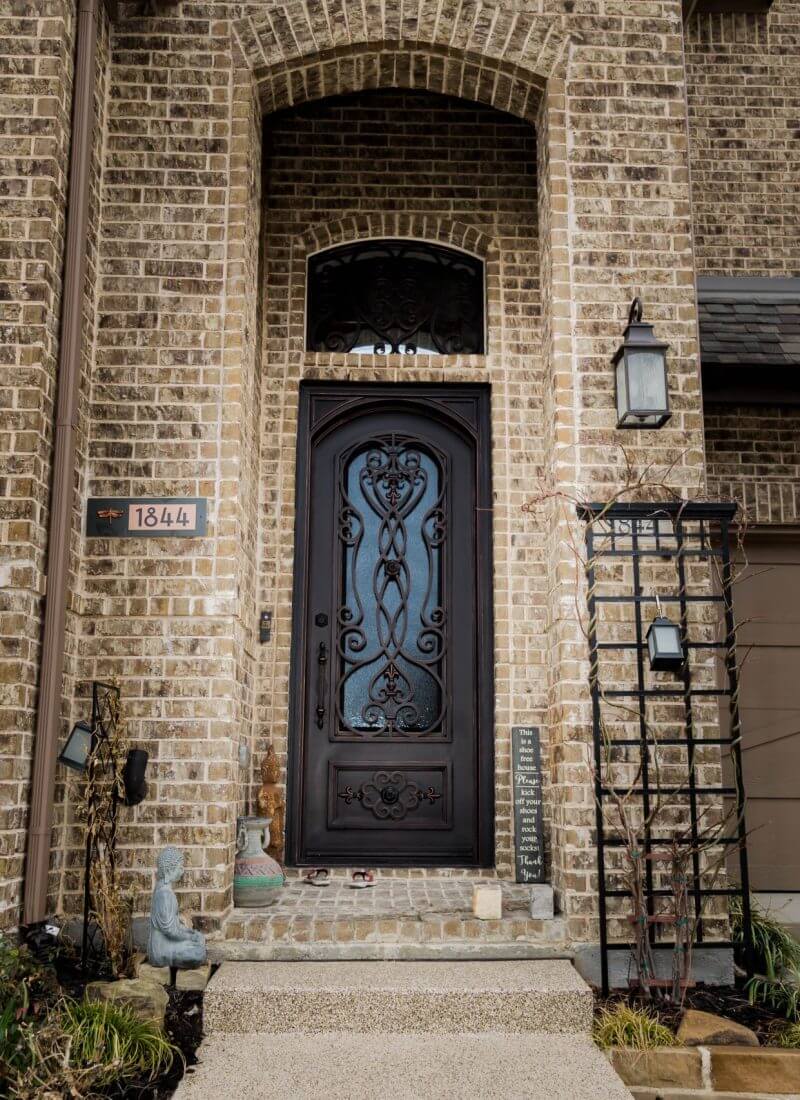
Locks on an iron door do double duty: they keep your home secure, and they’re a mechanical interface you interact with multiple times a day. If the lock feels gritty or the deadbolt drags, that’s a design problem — not a characteristic of iron doors.
Multi-point locking is the standard we prefer. Instead of a single latch at the handle, a multi-point lock engages two or more additional bolts (top, bottom, or both) when you throw the lock. That distributes the locking force across the frame and makes the door dramatically harder to force open.
European lock cylinders offer higher pick resistance and tighter key control than many domestic alternatives. They’re built to a different standard — measured by RC (Resistance Class) ratings. RC 2-3 is the sweet spot for residential entry doors: it certifies the lock can withstand a determined attack with basic tools for 3-5 minutes. For a burglar, that’s a brick wall.
Smooth operation is the telltale sign of quality. When you engage a German-engineered multi-point lock on one of our doors, it’s a clean, mechanical click — no grinding, no binding, no wrestling the handle. That precision comes from manufacturing tolerances measured in hundredths of a millimeter, not wishful thinking.
Handles and Pulls —
What You Touch Every Day
Love That Door®

You’ll touch your door handle thousands of times over the life of your home. The material, weight, and ergonomics of that handle shape your experience of the door every single day.
We offer handles in stainless steel, solid brass, and bronze — materials that age beautifully and don’t pit or flake. Powder-coated and plated finishes match the door’s aesthetic exactly because we spec them as a system, not as separate pieces from different suppliers.
Ergonomics matters on heavy doors. A thin, slippery handle forces you to grip harder. A well-proportioned grip — thick enough to feel solid, shaped to fit the hand — makes pulling a substantial iron door feel natural. On our oversized pivot doors, we use custom pulls that give you leverage without looking like gym equipment.
We test handles and locksets together. The throw of the lock, the spring tension in the latch, the clearance between the handle and the escutcheon — all engineered to work as one cohesive unit.
Book your FREE in-home or showroom consultation today—we'll measure your space, explore custom designs, and bring your vision to life!
Get a FREE quote! Share your measurements or a photo of your space, and our design experts will send you a personalized price estimate.
German-Engineered Hardware —
Why It's Different
Love That Door®

The hardware I spec for Love That Door isn’t picked from a catalog — it’s engineered to meet European precision standards that most American hardware simply doesn’t chase.
What makes it different? Tolerances. A typical residential lock might have manufacturing variances of ±0.5 mm. The German-engineered systems we use hold tolerances of ±0.02 mm — that’s 25 times tighter. When you reduce slop in the mechanism, you reduce friction, wear, and failure points.
That’s what makes one-finger operation on a 400-pound door possible. It’s not brute force — it’s everything aligning perfectly.
Key features of the European hardware systems we rely on:
- RC 2-3 burglar resistance — certified protection against break-in attempts using screwdrivers, pliers, and wedges.
- TUV NORD certification for automated drive systems — independent testing that verifies safety and durability over 100,000+ cycles.
- Self-cleaning tracks that eject debris instead of letting it grind down the rollers.
- Soft-close mechanisms that prevent slamming and protect the door, frame, and fingers.
American hardware standards (ANSI/BHMA) are built for lighter, smaller doors. European standards assume heavier loads, tighter security targets, and longer service lives. When you’re installing a custom iron door that you expect to last 30 years or more, that difference in engineering philosophy pays for itself.
What to Look for When
Evaluating Door Hardware
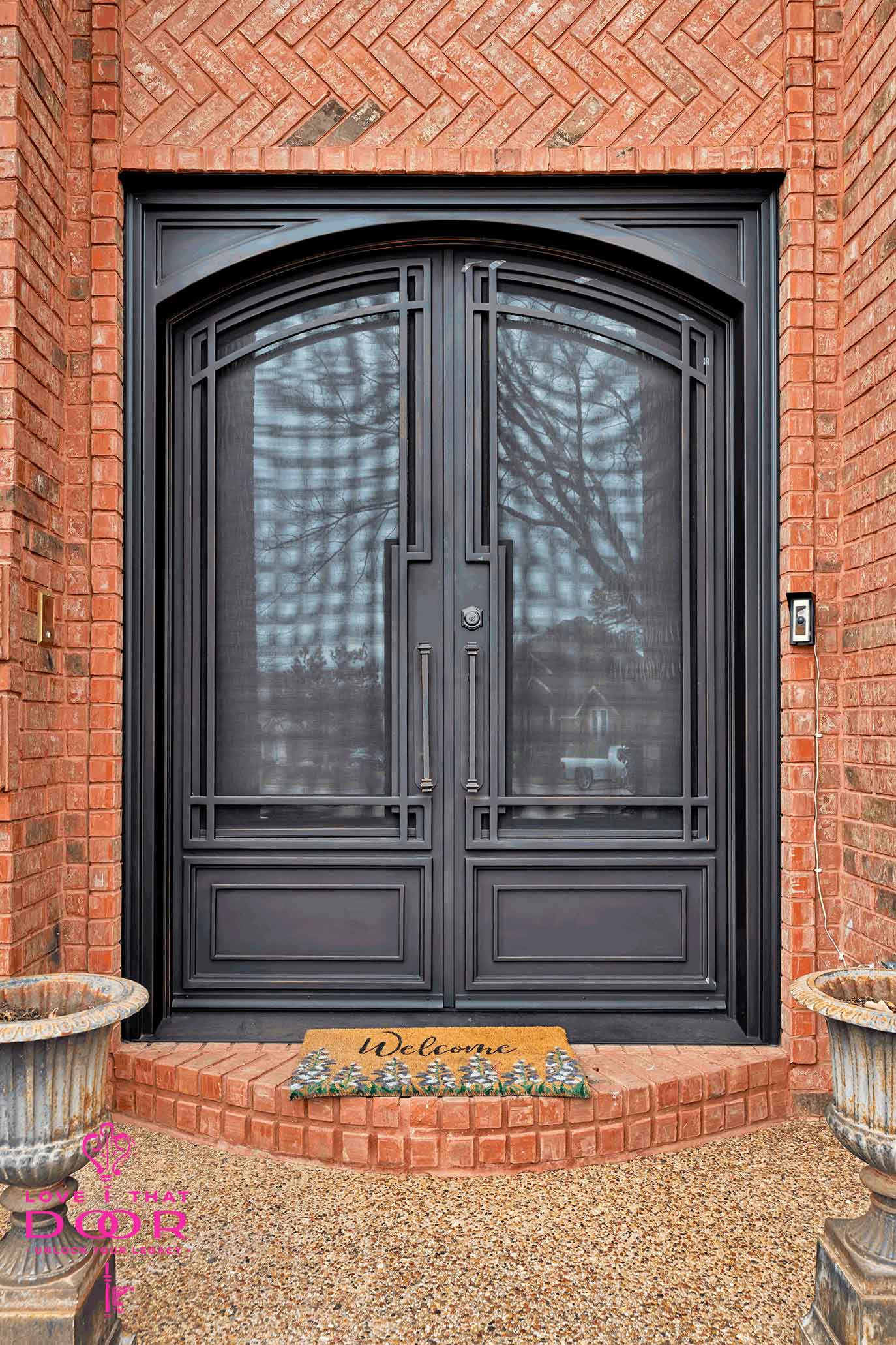
When you’re comparing iron door quotes, the hardware should be a deal-breaker — in both directions. Here are five questions to ask:
- What’s the weight rating on the hinges? If they can’t tell you, that’s your answer.
- Is this a single-point or multi-point lock? Multi-point is safer and extends the life of your weatherstripping by keeping the door tight against the frame.
- What burglar resistance standard does the lock cylinder meet? RC 2-3 is what you want — anything less is a weak link.
- Are the handles solid metal or plated pot metal? Solid metal lasts. Pot metal (zinc alloy) pits and breaks under repeated stress.
- Is the hardware tested as a complete system, or pieced together from different suppliers? System testing catches failures before they reach your home.
What cheap hardware feels and sounds like: A gritty, loose handle. A deadbolt you have to jiggle. A hinge that creaks from day one. If the door doesn’t glide closed with a solid, quiet thunk — walk away.
How Love That Door
Sources Hardware
Love That Door®

We design and engineer our doors in Texas, and we build them in factories we own. That means we aren’t picking hardware from a distributor’s catalog and hoping it fits. We spec German-engineered components directly — the hinges, locks, cylinders, and handles — and integrate them into our manufacturing process from the start.
Every piece is tested as part of the complete door system before it ever leaves the factory. The lock throw matches the strike plate. The hinge knuckles align with the leaf’s weight distribution. The handle grip sits at the right height and offset for natural use.
We control the quality chain because we own it. No middlemen, no off-the-shelf parts that “mostly fit,” no surprises. Just hardware that works as hard as your iron door does.
Schedule your free consultation and see the difference that precision hardware makes — in person, at any of our four DFW showrooms.
Book your FREE in-home or showroom consultation today—we'll measure your space, explore custom designs, and bring your vision to life!
Get a FREE quote! Share your measurements or a photo of your space, and our design experts will send you a personalized price estimate.
Frequently Asked
Questions
01.
Q: Do iron doors need special hinges?
A: Yes. Iron and steel doors are significantly heavier than standard entry doors and require heavy-duty ball-bearing hinges rated for their weight. Residential-grade hinges will sag and fail prematurely under the load of a 400-pound door.
02.
Q: What’s the difference between single-point and multi-point locks?
A: A single-point lock engages only at the handle level. A multi-point lock drives additional bolts into the top and bottom of the frame, distributing locking force across the door and making forced entry far more difficult.
03.
Q: How long does door hardware typically last?
A: Quality German-engineered hardware on a properly installed iron door can last 20-30 years or more with minimal maintenance. Cheap hardware may show signs of failure — sagging, binding, finish wear — within 2-5 years.
04.
Q: Can I upgrade the hardware on an existing iron door?
A: Often yes, though it depends on the door’s preparation and existing hardware footprint. We can assess your current door and recommend upgrades that improve security and operation. It’s more involved than swapping a knob on an interior door, but absolutely doable.
05.
Q: What does RC 2-3 burglar resistance actually mean?
A: RC (Resistance Class) is a European standard that rates how long a lock cylinder or complete door assembly can resist forced entry. RC 2-3 certifies resistance against attacks with basic tools — screwdrivers, pliers, wedges — for 3-5 minutes, which is enough to defeat the vast majority of opportunistic break-ins.
Book your FREE in-home or showroom consultation today—we'll measure your space, explore custom designs, and bring your vision to life!
Get a FREE quote! Share your measurements or a photo of your space, and our design experts will send you a personalized price estimate.
Get a free quote
REQUEST A QUOTE
Ready to Elevate Your Home with Custom Doors and Windows?
Fill out your contact details and let our design experts guide you through the process:
- Free in-home consultation tailored to your needs.
- Rough measurements and custom design for a perfect fit.