

Steel Door Structural Engineering — How 10-Gauge Cold-Rolled Steel Creates a Stronger Entry Door

Home » Steel Door Structural Engineering — How 10-Gauge Cold-Rolled Steel Creates a Stronger Entry Door
What 10-Gauge Cold-Rolled Steel Actually Means — And Why It's Superior
Love That Door®
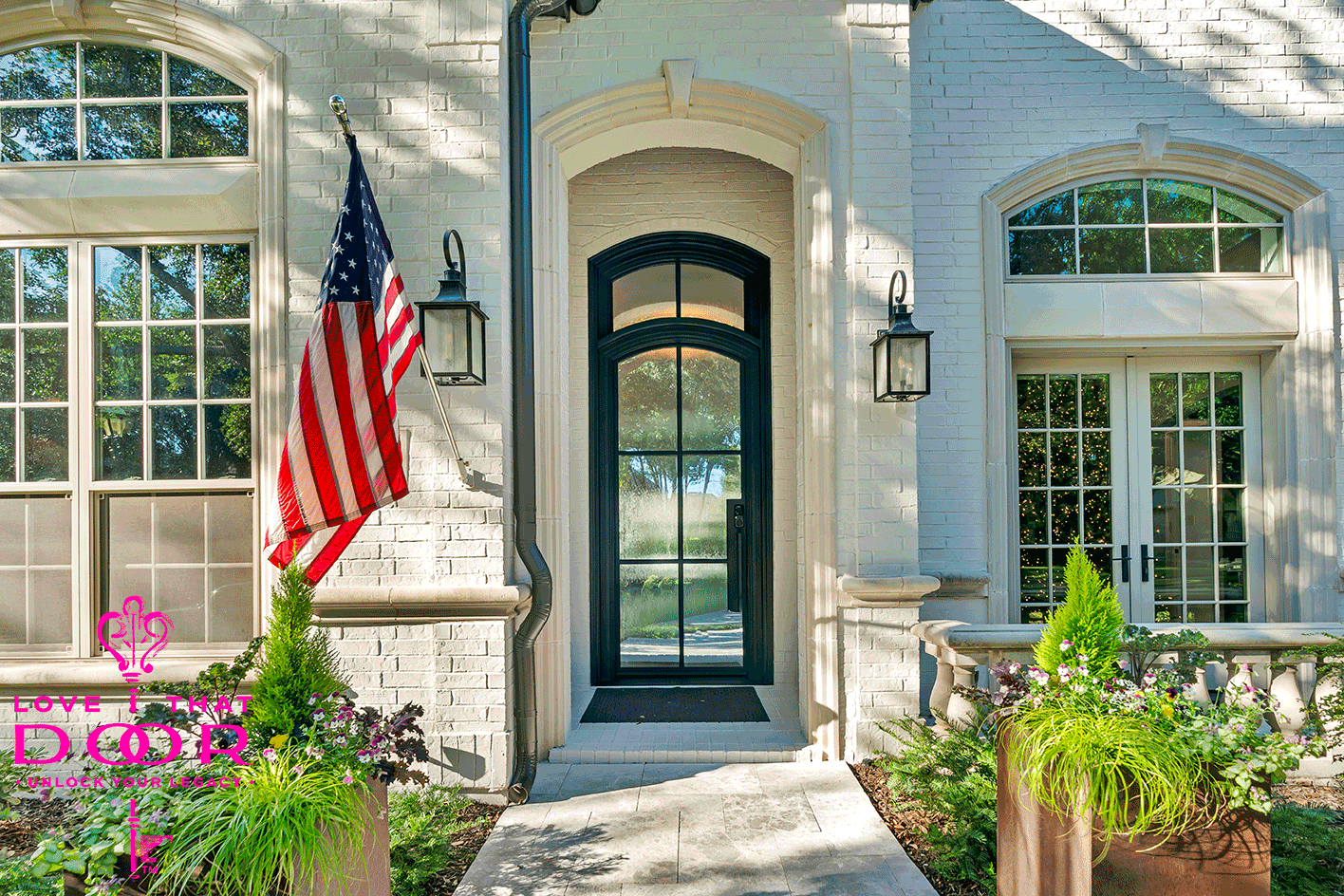
Steel door structural engineering determines whether your entry door performs flawlessly for 30 years or starts sagging, binding, and leaking within five. At Love That Door, we engineer every steel door from first principles — 10-gauge cold-rolled steel, continuous structural tube frame construction, polyurethane foam thermal breaks, and factory-direct manufacturing we control from CAD to final finish. Here’s what that engineering means for your home, and why most steel doors on the market skip the steps that matter most.
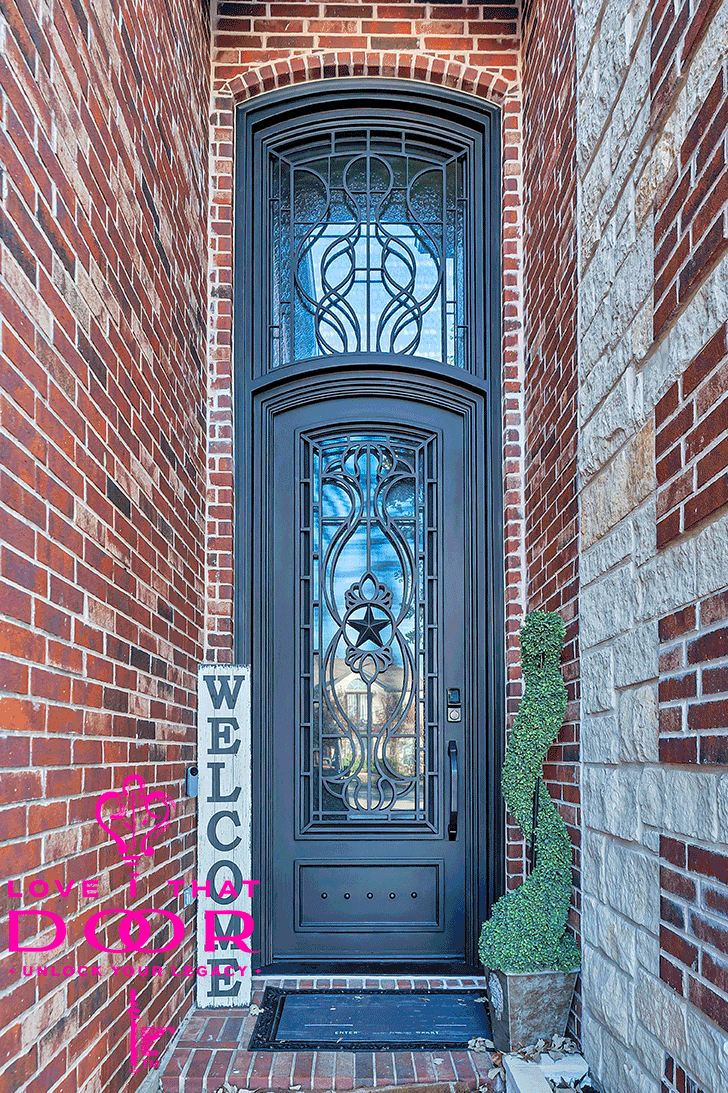
The steel gauge system can be misleading, so let me be precise. Steel gauge numbers run inversely to thickness: a lower gauge number means thicker steel. 10-gauge steel measures 0.135 inches thick (approximately 3.4mm). By comparison, 16-gauge steel — the most common gauge used in mass-market steel doors — measures 0.060 inches, and 18-gauge measures just 0.048 inches.
A 10-gauge door contains more than double the steel of a 16-gauge door. But raw thickness is only part of the story.
The cold-rolling process is what transforms the material. Cold-rolled steel is processed at room temperature after initial hot rolling, which compresses the steel’s crystalline grain structure. This grain compression increases yield strength by approximately 15–20% compared to hot-rolled steel of identical thickness. The process also produces tighter dimensional tolerances (typically ±0.002 inches for cold-rolled vs. ±0.010 inches for hot-rolled) and a smoother, more consistent surface finish.
For a steel entry door, these properties translate directly to performance:
- Higher yield strengthmeans the door resists bending under wind load and impact forces
- Tighter dimensional tolerancesmean consistent clearances around the slab — the door doesn’t bind when temperatures change
- Smoother surface finishcreates a better substrate for zinc coating and paint adhesion, which extends corrosion protection life
Most door manufacturers use hot-rolled steel because it’s cheaper and easier to form. We use cold-rolled because the structural performance difference is measurable, repeatable, and critical for a product engineered to last decades — not years.
Book your FREE in-home or showroom consultation today—we'll measure your space, explore custom designs, and bring your vision to life!
Get a FREE quote! Share your measurements or a photo of your space, and our design experts will send you a personalized price estimate.
Common Finish Types
for Iron and Steel Doors
Love That Door®
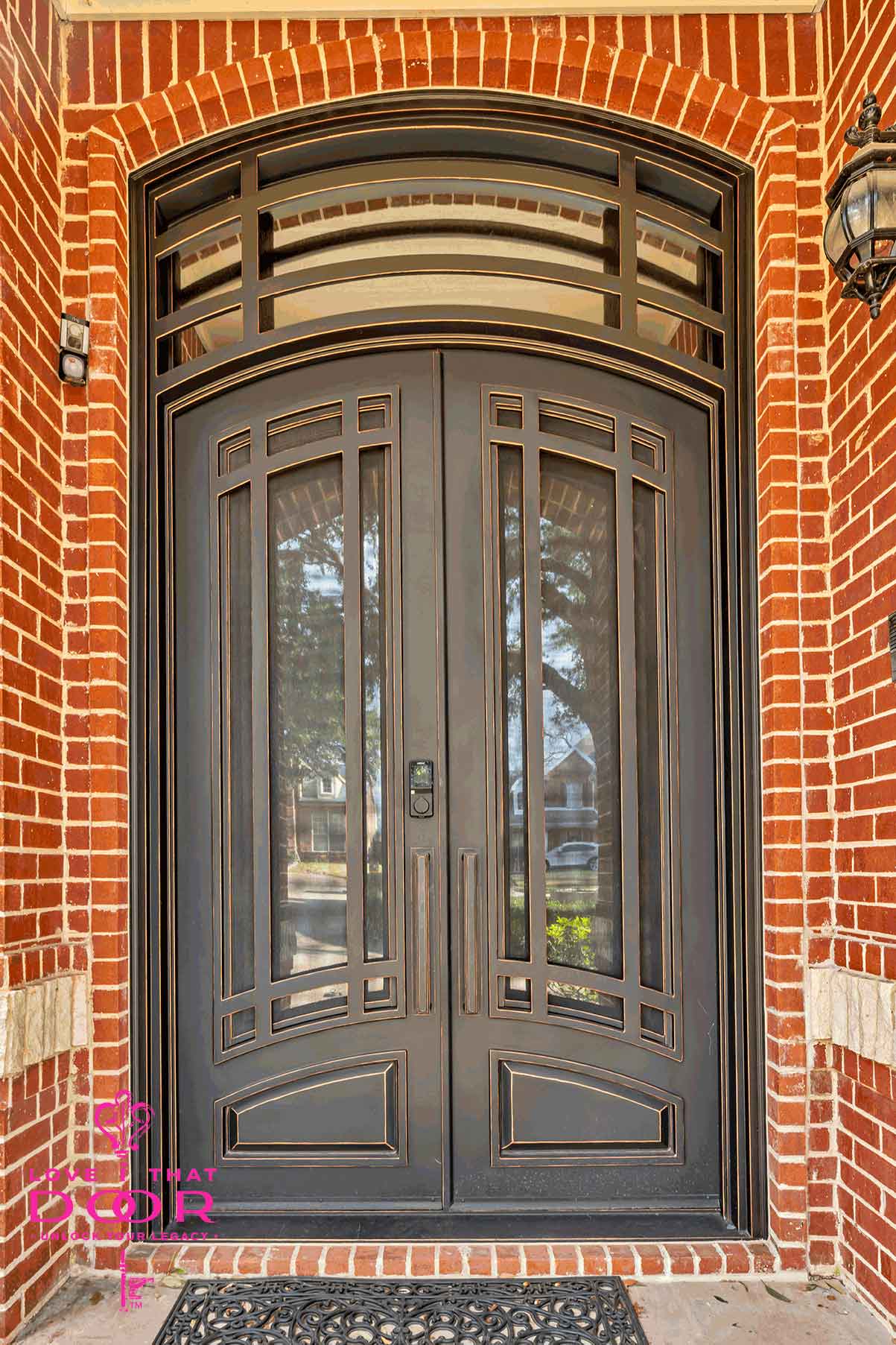
Oversized entry doors — pivot doors 8 to 12 feet tall, grand double-door entries spanning 8 to 12 feet wide — create engineering challenges that standard-sized doors don’t. Weight, leverage, and wind load all scale non-linearly with door size.
Weight and load distribution: A 10-foot-tall steel door slab with insulated glass can weigh 400 to 600 pounds. That dead load creates a significant moment arm at the hinge line. Every time the door opens and closes, the hinge stile experiences cyclic loading. Over a 20-year service life at 10 cycles per day, that’s more than 73,000 load cycles. If the hinge stile reinforcement isn’t engineered for this fatigue loading, microscopic deformation accumulates into visible sag — the door drags at the latch side, the reveal gaps become uneven, and eventually the lock no longer aligns with the strike plate.
Our solution is a reinforced hinge stile — an internal steel member inside the frame that distributes hinge forces across the full height of the door rather than concentrating them at the hinge mounting points. This is continuous structural tube construction: the vertical stiles, top rail, and bottom rail are each formed from a single piece of 10-gauge cold-rolled steel, creating closed structural sections that resist torsion and bending far better than open-channel or mechanically fastened assemblies.
Wind load engineering: Texas building codes require doors to resist design wind pressures ranging from 110 to 150+ mph depending on location. For a 4-foot-wide by 8-foot-tall single door, that’s approximately 25 to 35 pounds per square foot of uniform pressure — and higher at edge zones where pressure concentrates. Our engineering team runs finite element analysis (FEA) on each door configuration to verify that deflection under design wind load stays within acceptable limits that preserve weatherstripping contact and operational function — not just structural failure thresholds.
For oversized openings, wind load becomes the governing design condition. A 10-foot by 5-foot pivot door has 50 square feet of surface area. At 35 PSF design pressure, that’s 1,750 pounds of total wind force acting on the slab — force that has to transfer through the hinges, into the frame, and into the rough opening structure. This is not a catalog-selection problem. It’s a structural engineering problem, and it requires in-house engineering capability to solve correctly.
Welds, Joints, and Continuous
Structural Tube Construction
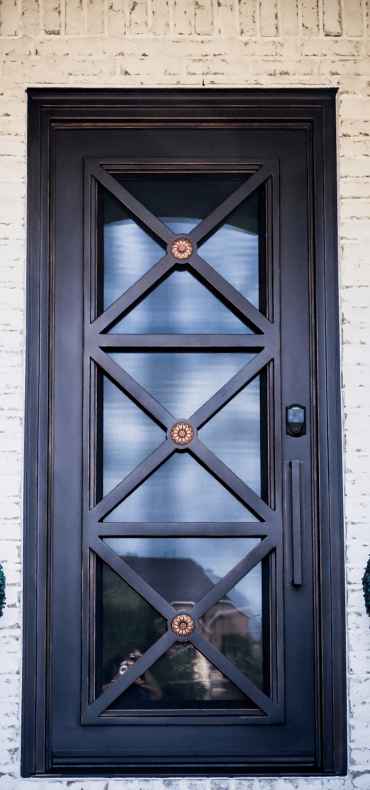
The joints in a steel door frame are where stress concentrates. How those joints are engineered determines whether the frame stays square, sealed, and structurally intact over decades of thermal cycling and operational loading.
Many steel door frames are built from mitered sections joined by exposed welds. The miter is cut, the pieces are positioned, and a weld bead is laid into the corner joint. After welding, the bead is ground flush — but grinding removes material and creates a heat-affected zone where the steel’s properties have been altered by welding temperatures. This is where stress cracks initiate, where rust finds a foothold, and where the frame’s structural continuity is compromised.
Our frames use a fundamentally different approach. Each frame member is formed from a single piece of 10-gauge cold-rolled steel into a continuous structural tube. The corner joints are precision-machined to create a mechanical interlock before welding — the pieces physically key together before any weld metal is added. This creates a joint where the mechanical interlock carries the structural load, and the weld serves as a seal and secondary reinforcement rather than the primary structural connection.
After welding, the entire frame receives a zinc coating for galvanic corrosion protection, followed by our triple-coat paint system — primer, color coat, and clear protective topcoat. The result is a frame that’s structurally continuous, corrosion-protected at every surface, and free of the visible weld seams and grinding marks that telegraph cost-cutting to anyone who knows what to look for.
For more on this topic, see our detailed comparison of visible welds versus clean lines in steel door construction.
Book your FREE in-home or showroom consultation today—we'll measure your space, explore custom designs, and bring your vision to life!
Get a FREE quote! Share your measurements or a photo of your space, and our design experts will send you a personalized price estimate.
Thermal Expansion Engineering
for Texas Climate
Love That Door®
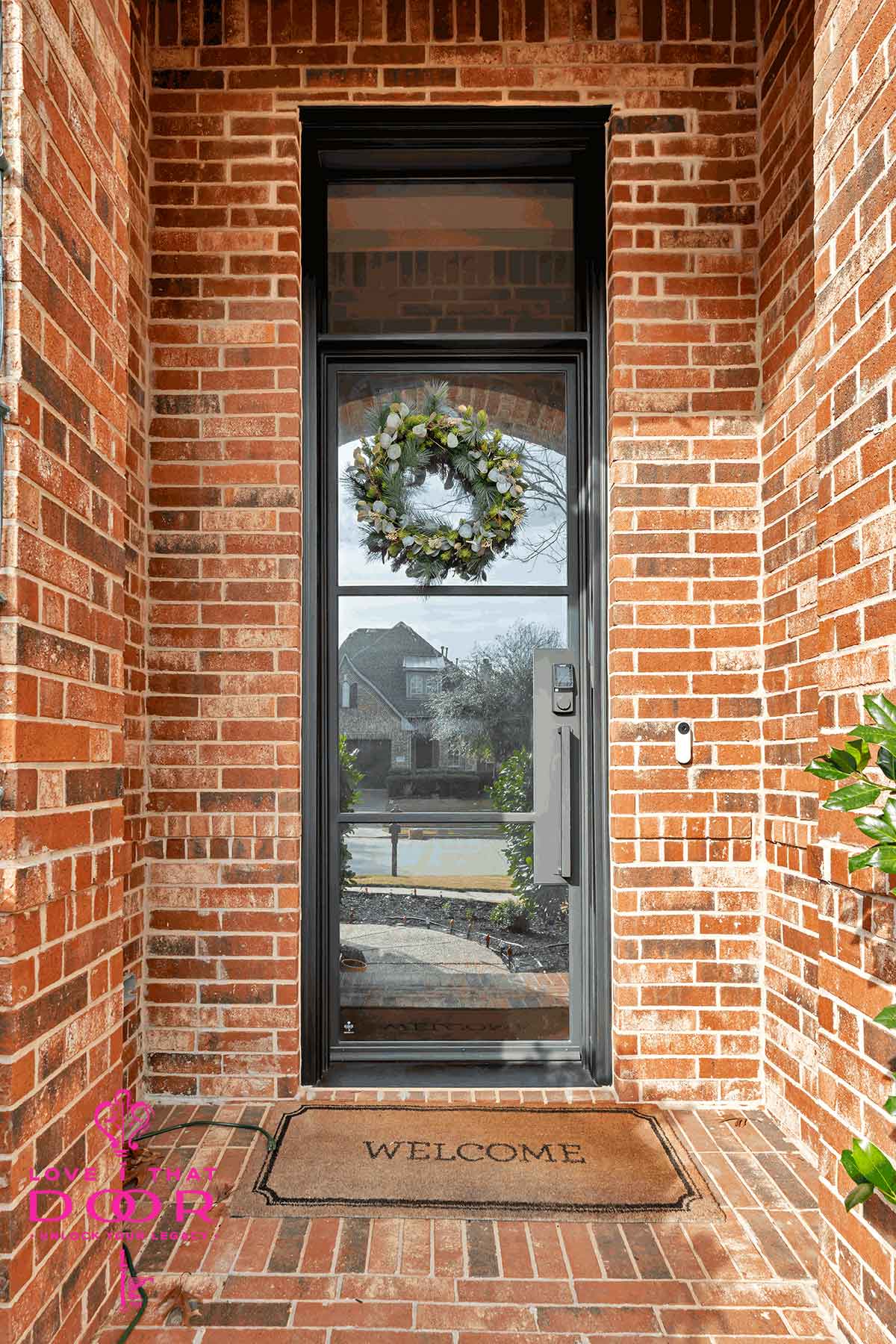
Texas doesn’t just get hot — it gets thermally aggressive. A dark-finished steel door on a west-facing exposure can reach 140°F surface temperature in August afternoon sun while the interior surface stays at 72°F. That’s a 68°F temperature differential across the thickness of the door. Meanwhile, the door slab as a whole — at 96 inches tall — expands and contracts with ambient temperature swings that routinely span 40–50°F in a single 24-hour period.
Steel expands at a rate of approximately 0.0000065 inches per inch per degree Fahrenheit. On a 96-inch door slab with a 50°F temperature swing, that’s 0.031 inches of dimensional change — enough to close up designed clearances and cause binding if the engineering doesn’t account for it.
Our thermal expansion engineering addresses this at three levels:
- Polyurethane foam core thermal break: A high-density polyurethane foam is injected between the inner and outer steel skins of the door slab. This foam core serves as an insulating barrier that dramatically reduces heat transfer from the exterior skin to the interior skin, minimizing the temperature differential that drives differential expansion. Unlike polymer-strip thermal breaks used in aluminum systems, the steel door’s thermal break is a continuous foam layer that also adds structural rigidity by bonding the two steel faces into a composite panel.
- Engineered clearances: Every LTD door is designed with thermal expansion clearances calculated for the specific door size, finish color (darker colors absorb more heat), and expected exposure conditions. These aren’t generic “one-size-fits-all” gaps — they’re dimensioned based on the actual thermal expansion math for each door configuration.
- Frame anchoring that allows differential movement: The door frame and the wall structure expand and contract at different rates and on different schedules. Our frame anchoring system accommodates this differential movement without transferring stress to the door slab or compromising the weather seal.
For a deeper dive into this topic, visit our page on thermal expansion in steel doors for Texas homes.
Triple-Coat Paint System and
Zinc Corrosion Protection
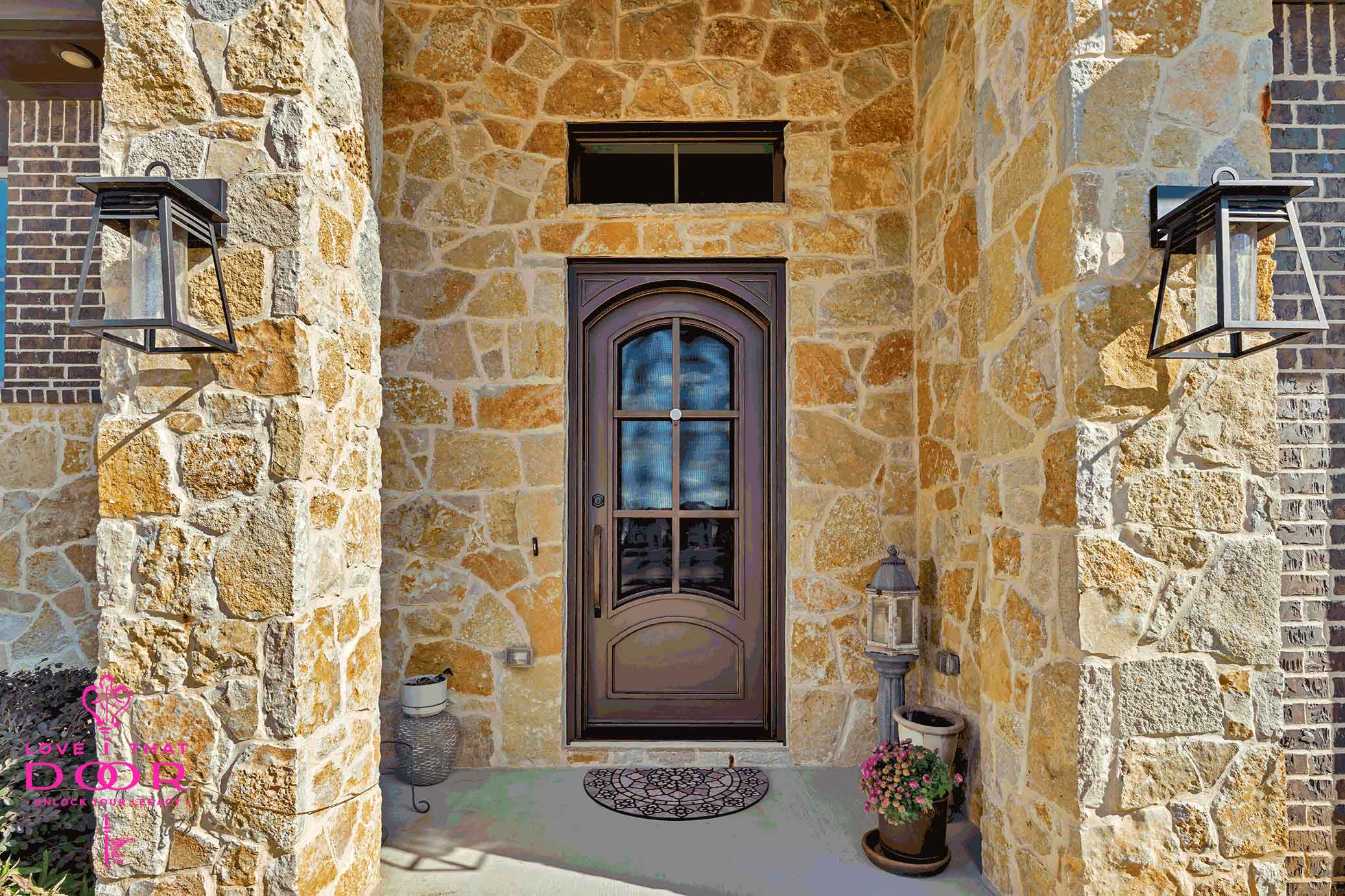
Steel doors live outdoors. They face UV radiation, rain, humidity, salt air (in coastal Texas), and the occasional hailstorm. Surface protection isn’t cosmetic — it’s structural. Rust doesn’t just look bad; it expands, delaminates paint, and progressively reduces the steel’s cross-sectional thickness.
Our corrosion protection system starts with a zinc coating applied to the entire frame and slab. Zinc provides galvanic protection: if the coating is scratched, the zinc sacrificially corrodes instead of the underlying steel. This is the same principle used in galvanized steel, marine applications, and automotive underbody protection.
Over the zinc layer, we apply our triple-coat paint system:
- Primer coat: Bonds to the zinc surface and provides additional corrosion inhibition
- Color coat: UV-stable polyurethane or polyester-based paint in the customer’s selected finish color
- Clear topcoat: Provides UV protection, chemical resistance, and the desired gloss level (matte to high-gloss)
This is an automotive-grade finishing process, not a single-stage powder coat or spray-and-ship approach. The result is a finish that maintains color, gloss, and protective integrity through years of direct Texas sun exposure.
Factory-Direct Quality Control
vs. Catalog Ordering
Love That Door®

The structural engineering behind a steel door only matters if it’s executed correctly in manufacturing. This is where the factory-direct model changes everything.
Most door companies are resellers. They take an order, select options from a third-party factory’s catalog, and hope the factory builds what was specified. If there’s a quality issue, there’s a chain of communication: customer → sales office → distributor → factory. By the time the message reaches someone who can fix the problem, three levels of interpretation have been applied.
At Love That Door, we designed and engineered our products in Texas, and we own our factories overseas. This means:
- The engineering team and the production team report to the same leadership. When our engineers specify a weld procedure, a thermal break density, or a clearance tolerance, that specification goes directly to the production floor — no catalog middleman, no distributor reinterpretation.
- Quality control is integrated, not outsourced. We maintain QC personnel in our factories who inspect at every production stage: incoming steel, forming and welding, thermal break injection, zinc coating, paint application, glass installation, and final assembly.
- Custom engineering is possible. Because we control both the CAD models and the production tooling, we can engineer solutions for non-standard openings, unique architectural requirements, and performance specifications that fall outside any catalog’s checkbox options.
The difference between factory-direct engineering and catalog ordering is the difference between a door built to your specific requirements and a door built to someone else’s idea of what’s “close enough.” For a structural element that has to perform for 20 to 30-plus years, close enough isn’t good enough.
What This Means for
Your Home

When you’re investing in a custom steel entry door — especially an oversized door for a grand entry — the structural engineering determines the entire ownership experience. A properly engineered door opens smoothly on a 105°F afternoon and a 25°F morning. It seals tight in a driving rainstorm. It doesn’t sag, bind, leak, or rattle. Year after year, decade after decade.
A door that skipped the engineering? You’ll know within the first few Texas seasons. It’ll start with a slight drag on the threshold. Then a gap in the weatherstripping. Then a lock that doesn’t quite line up. By year five, you’re calling someone to adjust hinges that have already been adjusted to their limit.
The engineering we put into every LTD door — from the 10-gauge cold-rolled steel to the polyurethane foam thermal break to the continuous structural tube frame — is invisible by design. If it’s done right, you never see it. You just experience a door that works perfectly, every time, for as long as you own your home.
That’s the standard. And it starts with the structural engineering.
Schedule your free consultation today — let’s engineer the entry door your home deserves.
Book your FREE in-home or showroom consultation today—we'll measure your space, explore custom designs, and bring your vision to life!
Get a FREE quote! Share your measurements or a photo of your space, and our design experts will send you a personalized price estimate.
Frequently Asked
Questions
01.
Q: What gauge steel is best for an entry door?
A: 10-gauge cold-rolled steel (0.135 inches thick) is the superior choice for a premium entry door. It provides more than double the material thickness of 16-gauge steel (0.060 inches), which is the most common gauge in mass-market doors. The cold-rolling process further increases yield strength by 15–20% over hot-rolled steel by compressing the grain structure. For oversized doors or doors in high-wind regions like Texas, 10-gauge cold-rolled steel provides the structural integrity needed to resist sagging, wind deflection, and impact forces over a multi-decade service life.
02.
Q: How does a thermally broken steel door work?
A: A thermally broken steel door uses a polyurethane foam core injected between the inner and outer steel skins to create an insulating barrier. This foam core interrupts the thermal bridge that would otherwise conduct heat directly from the hot exterior skin to the cooler interior skin. In Texas summer conditions, where a dark door can reach 140°F on the exterior surface, the thermal break keeps the interior surface within a few degrees of room temperature. The foam core also dampens differential thermal expansion between the two steel skins and adds structural rigidity by bonding the skins into a composite panel.
03.
Q: Can steel doors handle Texas heat without warping?
A: Yes — when properly engineered. A dark-finished west-facing steel door in Texas can reach 140°F on the exterior while the interior side stays at 72°F, creating a 68°F temperature differential across the door thickness. This drives differential thermal expansion between the inner and outer skins. LTD doors manage this through three engineered solutions: a polyurethane foam thermal break that reduces heat transfer between the skins, engineered clearances calculated for the specific door size and finish color, and 10-gauge cold-rolled steel whose dimensional stability resists the bending forces that thinner steel cannot handle. Without these features, steel doors can and do warp in Texas conditions.
04.
Q: What is continuous structural tube construction in steel doors?
A: Continuous structural tube construction means each frame member (vertical stiles, top rail, bottom rail) is formed from a single piece of 10-gauge cold-rolled steel into a closed, hollow structural section — essentially a steel tube. This creates a frame that resists torsion (twisting) and bending far better than open-channel or mechanically fastened assemblies. At the corners, the tube sections interlock via precision-machined joints before welding, creating a structural connection that’s stronger than a simple miter-and-weld joint. The result is a frame that stays square and structurally intact through decades of thermal cycling and operational use.
05.
Q: Why does factory-direct manufacturing matter for steel door quality?
A: Factory-direct manufacturing means the company that engineers the door also controls the factory that builds it. This eliminates the communication gaps and quality compromises that occur when a sales office orders from a third-party catalog factory. At LTD, our Texas-based engineering team specifies the materials, tolerances, and processes directly to production teams in factories we own. This enables custom engineering solutions for non-standard requirements, integrated quality control at every production stage, and accountability — when we offer a lifetime warranty on the frame and slab, it’s because we control every step from CAD model to final inspection.
06.
Q: How long should a properly engineered steel door last?
A: A properly engineered steel door built from 10-gauge cold-rolled steel with full zinc corrosion protection, a polyurethane foam thermal break, continuous structural tube frame construction, and an automotive-grade triple-coat paint system should perform for 20 to 30-plus years with basic maintenance. This is why LTD offers a lifetime warranty on the frame and slab. The most common failure modes in steel doors — sagging from inadequate hinge reinforcement, binding from unmanaged thermal expansion, rust from insufficient corrosion protection, and frame distortion from wind load deflection — are all engineering problems, not material problems. Proper engineering eliminates them at the design stage.
Book your FREE in-home or showroom consultation today—we'll measure your space, explore custom designs, and bring your vision to life!
Get a FREE quote! Share your measurements or a photo of your space, and our design experts will send you a personalized price estimate.
Get a free quote
REQUEST A QUOTE
Ready to Elevate Your Home with Custom Doors and Windows?
Fill out your contact details and let our design experts guide you through the process:
- Free in-home consultation tailored to your needs.
- Rough measurements and custom design for a perfect fit.