

Transitioning From Damaged Doors to Steel Solutions


Chad Crenshaw
I’ve walked hundreds of DFW homes with tired, damaged doors, and the pattern is always the same: years of repairs that never quite hold. Rot, rust-through, warping, failed seals — at some point you stop fixing and start replacing. When I see a door that’s been patched more than twice, my honest engineering advice is to transition to steel, and here is why.
The energy loss is the quiet part of the story. A door that no longer seals leaks cooled air all summer and heated air all winter, and that bill adds up while you keep deciding.
When Is an Entry Door Too Damaged to Repair?
I look for structural damage, not cosmetic wear. If the damage only goes skin deep — scratches, dings, a faded finish — we talk about refinishing. Once the damage touches the structure, repair stops making sense.
- Rot — soft, crumbling wood anywhere in the frame or slab means the integrity is gone. You can’t glue strength back into rotted wood.
- Rust-through — when rust has eaten through the metal skin, the door is structurally compromised, not just ugly.
- Warping — a door that binds, gaps at the corners, or won’t seat in the frame has lost its geometry. Adjusting the hinges is a band-aid.
- Failed seals — weatherstripping that leaks air and water is a symptom that the door and frame no longer fit each other.
- Energy loss — a door that no longer seals lets conditioned air pour out, and you feel it on every bill between June and September.
When I see two or more of those, I tell homeowners to stop spending money on repairs. The how iron and steel doors fail guide I wrote covers exactly what breaks down and why.
Schedule your free consultation.
Can a Steel Door Fix Problems a Wood or Fiberglass Door Can't?
This is the part I get excited about as an engineer. Steel doesn’t rot. Steel doesn’t warp. Steel doesn’t get eaten by termites. The failures that killed your old door are the ones steel simply doesn’t have.
- 10-gauge cold-rolled steel — thick enough to hold its shape through Texas summers and winters.
- Zinc coating and triple-coat paint — the corrosion protection is built in before the color goes on.
- Polyurethane foam core — injected between the inner and outer steel skins, so the slab insulates and stays rigid.
- No organic material — nothing for moisture, mold, or insects to feed on.
Energy performance is part of the same equation. The foam core that stiffens the slab also insulates it, so the door that fixes your damage is the same door that kills the draft coming through the old one.
Wood and fiberglass doors have their place, but they kept dying on the same houses I kept getting called to. Steel changes the conversation. The engineering behind custom steel doors post walks through how we build that durability in from the start.
How Do You Replace a Damaged Door Without Changing the Opening?
That’s the question every homeowner asks, and the answer is: you don’t have to change the opening. We engineer the new steel door to fit the rough opening that’s already there.
- Measured on site — our team takes exact dimensions of your existing rough opening.
- Engineered frame — the steel frame is designed around those measurements, including the load path for your specific wall.
- No structural rework — because the frame is built to the opening, not the other way around, foundations and headers stay untouched.
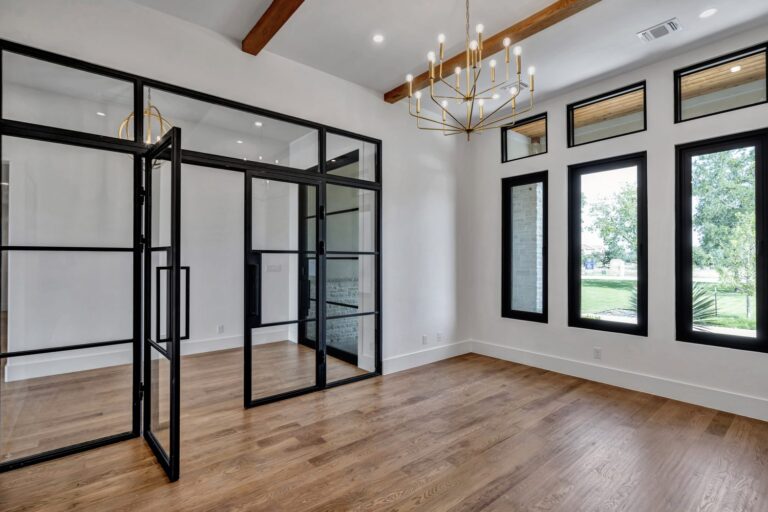
- Sidelights and transoms — if your old entry had them, the new steel unit is engineered as one integrated system.
For wide openings, that’s where my patented structural door system earns its keep — continuous structural tube construction keeps big spans aligned without the weld-point failures of multi-piece frames. We design around the opening you have, then build the steel to own it.
Schedule your free consultation.
What Happens to the Old Door and Frame?
Nothing fancy — the old unit comes out completely, and that’s exactly what we want.
- Full removal — the old door, frame, and hardware are taken out down to the rough opening.
- Rotten sub-structure flagged — if we find damage behind the old frame, we address it before the new unit goes in.
- Clean prep — the opening is squared, leveled, and waterproofed before install.
- Responsible disposal — the old door is hauled away, not left for you to deal with.
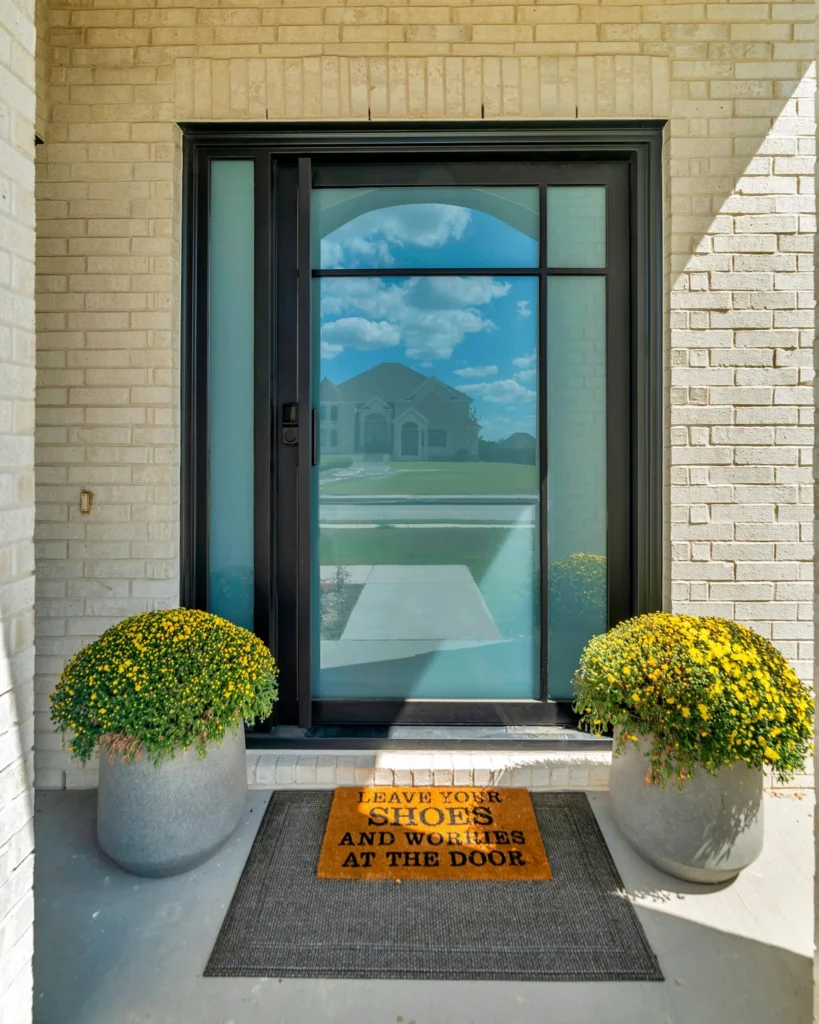
Removing the old frame is non-negotiable with me. Sliding a new door into a rotten old frame just moves the failure date forward. When we replace, we replace everything, so the new steel starts from a clean, sound opening. The finished look is what sells DFW homeowners on it — entry doors Dallas-Fort Worth shows the full transition at scale.
The job site gets a clean sweep, too. Dust and debris are contained during demo, and the crew walks the house with you when they’re done so the new door starts its life on dry, clean floors.
What Does the Transition Look Like From Quote to Installed?
Clean, and boring in the best way. From the first measurement to the final inspection, one in-house team owns the whole job.
- Site measurement and design — we spec size, glass, hardware, and finish, and you pick from our factory-direct finish program.
- Build — the door is fabricated in our own factory from 10-gauge cold-rolled steel, designed and engineered in Texas.
- Install — our in-house crews remove the old unit and set the new one, so there’s no handoff between a sales team and a stranger crew.
- Permits and inspection — we handle the paperwork and coordinate the inspection as part of the project.
- Wipe-out warranties — lifetime frames and slabs, 10-year finishes, 5-year glass, 1-year labor.
You sign a quote, we handle everything between that signature and the day you walk through your new entry. That full-turnkey control is why I push the steel door guide at every DFW homeowner — the process is the product.
Every quote we write covers the full scope: engineering, fabrication, removal, install, permits, and inspection. The number you approve is the cost you pay, with no surprise line items waiting at the end.
How Chad Crenshaw engineered a better iron door
Schedule your free consultation.
Q: Can a damaged wood entry door be replaced with a steel door?
A: Yes. We measure the existing rough opening and engineer a steel frame to fit it, so no structural changes to the house are needed.
Q: When is an entry door too damaged to repair?
A: When rot, rust-through, warping, or failed seals have damaged the structure. Repairs mask the problem; steel replacement solves it.
Q: Does a steel door replacement require a new frame?
A: Yes, and that’s intentional. The old frame comes out completely so the new steel frame starts from a clean, sound opening.
Q: Why does steel outlast wood and fiberglass doors?
A: Steel doesn’t rot, warp, or feed insects, and our 10-gauge cold-rolled build with a foam core holds its shape and insulation for decades.
Q: Who handles permits for a steel door replacement in DFW?
A: Our in-house team coordinates permits and inspections as part of the installation project.
Q: How long does a damaged-door-to-steel transition take?
A: From site measurement through install, most projects run a few weeks, with factory fabrication and install handled by our own crews.