

5 Ways Iron & Steel Doors Fail Over Time (And How to Prevent Each One)
Home » 5 Ways Iron & Steel Doors Fail Over Time (And How to Prevent Each One)

Scroll To Explore

What Every DFW Homeowner Should Know Before Buying
Iron and steel doors have a well-earned reputation for security, beauty, and longevity. But that reputation depends entirely on how the door was manufactured. Drive through almost any neighborhood in DFW and you’ll eventually find an iron door that’s rusting at the seams, sticking in summer, or showing ugly blemishes beneath a cracking paint job. None of that is inevitable — it’s the result of predictable engineering shortcuts. Here are the five most common ways iron and steel doors fail, what to look for before you buy, and how proper construction prevents each one.
The difference isn’t just materials — it’s how they’re engineered.
At Love That Door®, we’ve solved the most common failure points with patented systems and true structural construction.
Here are 5 critical attributes every serious homeowner should demand.
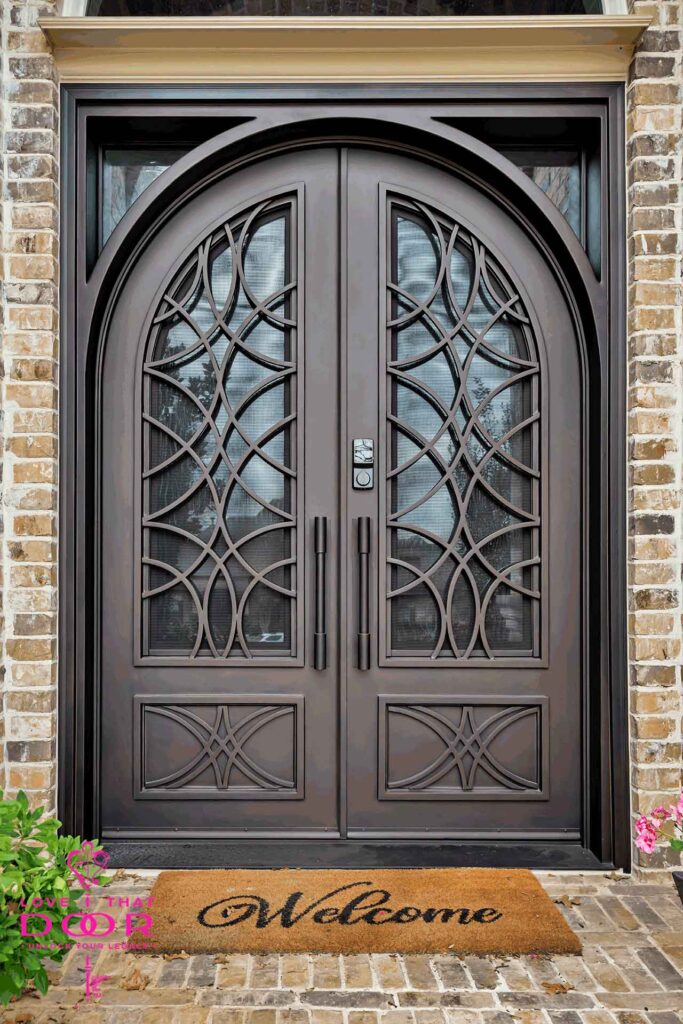
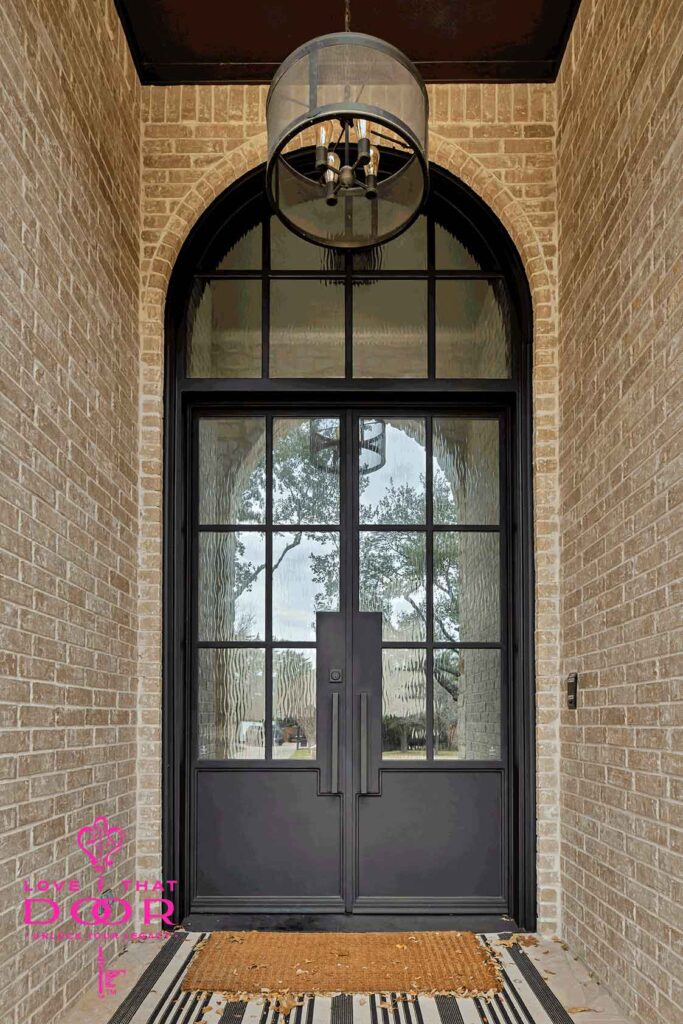
Rust and Corrosion from Poor Surface Preparation
The most common iron door failure starts before the paint is ever applied. Most manufacturers use hot-rolled steel, which develops a layer of mill scale during production — an uneven, oxide-rich surface that resists paint adhesion and traps moisture underneath the finish. Over time, that moisture works inward, and rust follows. The fix isn’t a thicker coat of paint. It’s starting with the right steel. Cold-rolled steel has a much smoother, more consistent surface that bonds properly with protective coatings. Combined with a galvanized and zinc coating process (rather than simple powder coating), the steel is protected at the molecular level before a single drop of paint is applied.
Structural Failure at the Welds
Multi-piece iron door frames are assembled with individual welds connecting framework sections. Each weld point is a potential failure: stress concentrations, hairline cracks, and gaps that let water infiltrate the structure. In Texas, where thermal cycles are extreme, those welds expand and contract at slightly different rates than surrounding steel — accelerating degradation year after year. The better solution is a single-framework, patented construction — one continuous structural unit with no multi-piece welds to fail. Love That Door’s approach eliminates the most common structural failure point in iron door manufacturing. There’s simply no joint to crack.
Gaps and Misalignment from Thermal Expansion
Texas summers routinely push surface temperatures on dark steel doors well past 150°F. Winter nights can drop below freezing. That 150-degree swing causes steel to expand and contract measurably — and cheap doors aren’t built to handle it. The symptoms are easy to spot: doors that stick in July, gaps that appear in January, weather stripping that compresses unevenly, and thresholds that no longer sit flush. Proper thermal management starts with 10 gauge cold-rolled steel, which maintains dimensional stability better than thinner alternatives. It continues with Q-Lon weather stripping on both sides of the door and a custom iron threshold welded directly to the unit — not shimmed in after the fact.
Transom Separation and Differential Settling
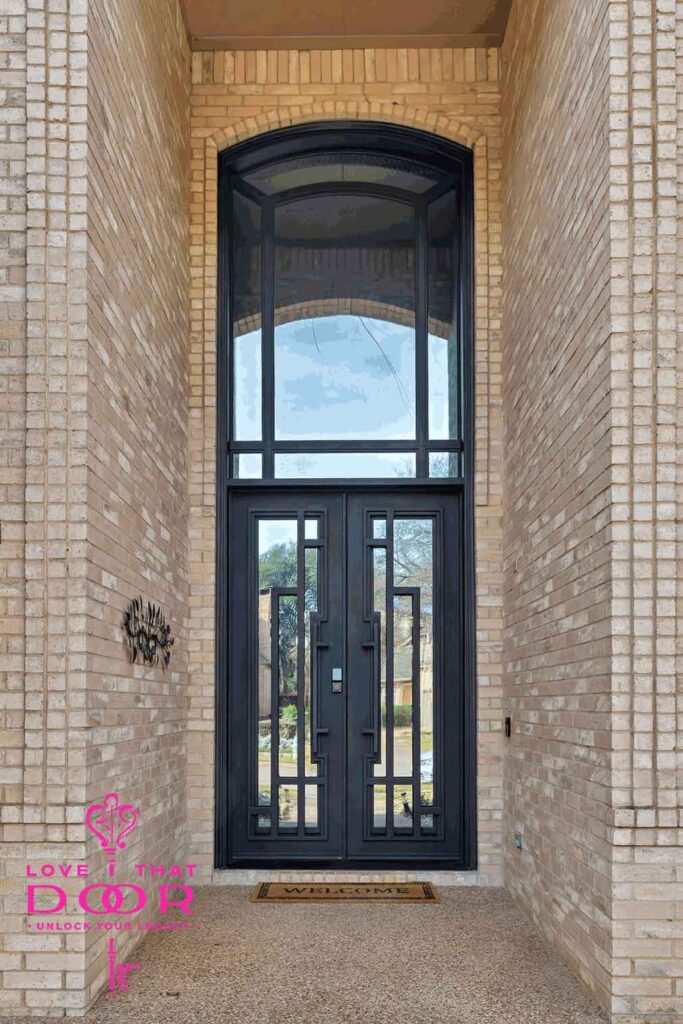
On doors with transom windows, one of the most frustrating failure modes is hard to see until it’s expensive to fix: the transom and door frame settling at different rates. When these components are installed as separate pieces — framed independently and connected at the job site — they respond differently to foundation movement, temperature shifts, and load changes. Over years, gaps open, glass seals fail, and the visual alignment of the entire entry falls apart. The solution is to treat the door and transom as a single structural system from the start. Unified door-and-transom engineering eliminates the differential settling problem by ensuring both components move as one.
Finish Breakdown from Inadequate Paint Systems
An iron door’s finish isn’t just about aesthetics — it’s the primary barrier between the steel and the environment. Most budget doors use a single-stage paint system applied over an inadequately prepared surface. UV exposure, moisture, and thermal cycling degrade that finish within a few years, and once it begins to crack or peel, corrosion moves fast. A proper finish system is multi-stage: zinc coating to prevent oxidation at the substrate level, followed by a triple coat paint process that builds real depth and adhesion. That’s why Love That Door backs its finish with a 10-year warranty — and the door itself with a lifetime warranty.
If you’re evaluating iron door brands, the Dare to Compare page lays out exactly how Love That Door’s specifications stack up. Love That Door has showrooms across the DFW area, including Frisco, Dallas, Fort Worth, and Grapevine. Free consultations are available — bring your questions, your floor plan, or just your curiosity.