

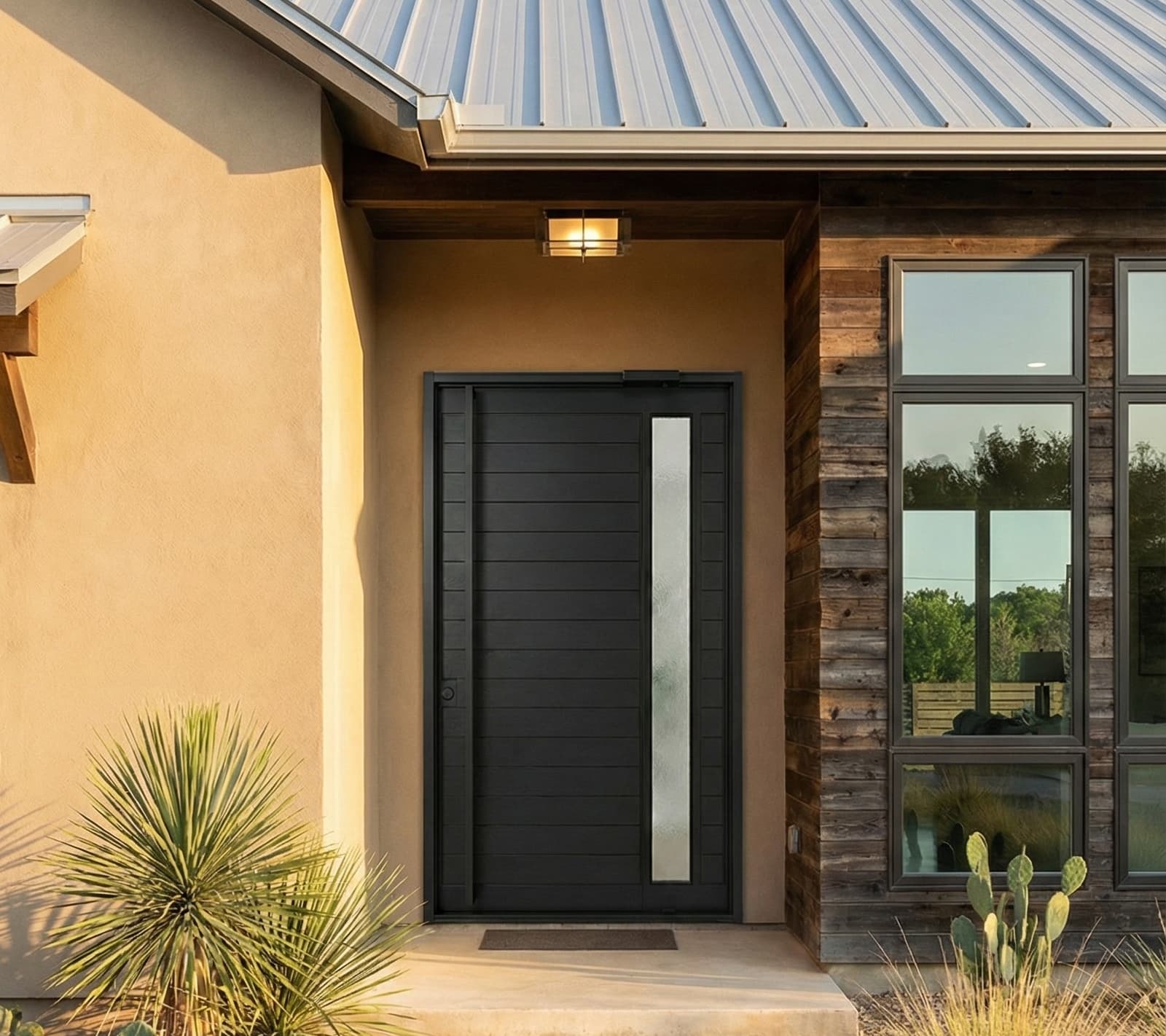
Your front door is more than just an entry point, it’s one of the most important components of your home’s security. As homes evolve in design and technology, so do the standards for what makes a door truly secure.
In 2026, homeowners are no longer looking at doors as standalone products. They’re evaluating complete entry systems, where material, engineering, and installation all play a role.
Here are the key features that define a secure front door today.
1. Strong, Durable Materials
The foundation of any secure door is the material it’s made from. Not all doors offer the same level of protection.
High-security entry doors are typically built using:
- Steel or iron construction for maximum strength
- Reinforced cores that resist impact
- Durable materials that don’t warp or weaken over time
These materials provide the structural integrity needed to withstand forced entry.
Pull Quote:
“A secure door starts with the strength you can’t see.”
2. Reinforced Frames Matter Just as Much
A common misconception is that the door itself is the only important factor. In reality, the frame is just as critical.
Even a strong door can fail if the frame is weak or improperly installed.
A secure entry system includes:
- Reinforced frames
- Proper anchoring into the home’s structure
- Tight alignment to prevent gaps
Security is always a system, not a single component.
3. Advanced Locking Systems
Locks play a major role in how secure a door actually is. Modern entry doors often use more advanced locking systems than traditional single deadbolts.
Key features to look for include:
- Multi-point locking systems
- Reinforced deadbolts
- High-quality hardware designed for durability
These systems distribute force across multiple points, making forced entry significantly more difficult.
4. Door Gauge and Thickness
The thickness of the door, often referred to as gauge, is another critical factor.
In general:
- Thicker materials provide better resistance
- Lower gauge numbers indicate stronger construction
High-quality iron or steel doors use thicker materials to improve durability and security.
Pull Quote:
“Thickness isn’t just a spec, it’s a layer of protection.”
5. Secure Glass Options
Many modern entry doors include glass elements for design and natural light. While this enhances aesthetics, it’s important that the glass is also secure.
Secure door systems may include:
- Reinforced or tempered glass
- Insulated glass panels
- Proper sealing and installation
When designed correctly, glass can be both functional and secure.
6. Professional Installation
Even the best door system can fail if it’s not installed correctly.
Professional installation ensures:
- Proper alignment and sealing
- Secure anchoring of frames
- Full functionality of locking systems
This is one of the most overlooked, but most important, factors in door security.
7. Integration with Modern Architectural Systems
In modern homes, front doors are often part of a larger architectural system that includes windows and other openings.
For example:
- Aluminum systems may be used for surrounding glass panels
- Thermally broken frames help maintain performance
- Entry doors are aligned with overall structural design
This integration improves both performance and long-term reliability.
Final Thoughts
A secure front door is not defined by a single feature, it’s the result of materials, engineering, and proper installation working together.
In 2026, homeowners should look beyond appearance and focus on how the entire system performs. From reinforced frames to advanced locking systems, every detail contributes to the overall security of the home.
At Love That Door®, we design entry systems that combine strength, performance, and architectural precision, helping homeowners feel confident in their investment.
Explore Your Options
If you’re considering upgrading your front door and want a system designed for both security and performance,Request a Free Consultation at lovethatdoor.com