

How to Choose the Right Patio Door Configuration


Chad Crenshaw
After 25 years of installing patio doors in DFW, the configuration decision trips up more homeowners than anything else. How many panels? Which way should it open? Bifold or lift-and-slide? These aren’t style questions — they’re engineering decisions that change how you live in the space.
How Many Panels Does Your Patio Door Need?
Panel count comes down to two things: your opening width and how much you want the doors to stack when open.
- Every aluminum patio door panel has a practical width range of 30 to 42 inches — narrower and the glass looks like a window, wider and the panel gets heavy enough that you feel it when you push
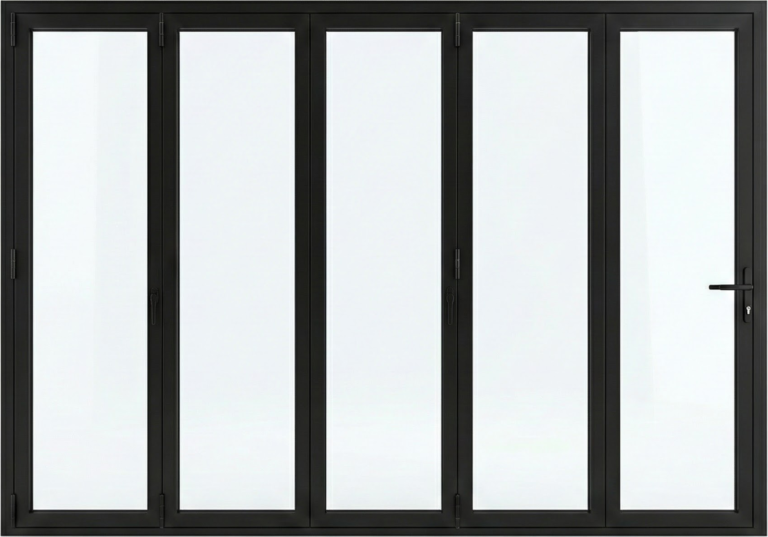
- 8-10 foot opening: 3-4 panels — three panels give roughly 32-40 inch glass widths; four panels give 24-30 inch panels with a tighter stack
- 12-16 foot opening: 4-6 panels — this is the sweet spot; four panels at 36-48 inches each give big dramatic glass; six panels at 24-32 inches each give a tighter stack and more flexibility
- 18-24+ foot opening: 6-10+ panels — at this size, more panels mean each one is lighter and the folded stack takes up less depth
- The rule: count your panels so each lands between about 30 and 40 inches wide — if the math lands between counts, go with more panels for the tighter stack
Schedule your free consultation at any of our 4 DFW showrooms.
Related: Aluminum Patio Door Buyer’s Guide · How Bifold Door Hardware Works
Should Patio Doors Open Inward or Outward?
This decision changes more than you think. It affects furniture placement, traffic flow, and how the door interacts with wind.
- Outward-opening is our default on bifold door systems — the panels fold to the exterior, stacking against the outside wall; outward opening preserves interior floor space and performs better in wind because positive pressure pushes panels tighter against their seals
- The downside of outward: bifolds need exterior clearance — if your patio is narrow (6 feet from door to a pool or wall), an outward stack might crowd it, and on gusty days open panels act like a sail (the 880-lb-per-panel rating on our German-engineered track system accounts for wind loading)
- Inward-opening folds panels into the room, losing interior floor space equal to the folded stack depth (roughly 3-4 inches per panel) — 18-24 inches for a 6-panel door; inward makes sense when exterior space is tight, when the patio is uncovered, or when HOA rules prohibit exterior projections
- I’d estimate 80% of our DFW installations are outward-opening — interior space in Texas homes tends to be more precious than exterior patio depth
Related: Bifold Door Track Systems and Thresholds · Aluminum Patio Door Testing Standards
Corner-Opening Bifolds vs. Straight Runs — Which Is Right for You?
A corner-opening bifold is the configuration where two walls of glass meet at a 90-degree corner with no fixed post between them. Open both sets and the corner of the room disappears.
- Corner openings look incredible but require more structural engineering than a straight run — removing a corner post changes the load path, and the roof load that used to travel down through that post must transfer into headers on either side
- The German-engineered hardware includes a corner meeting stile profile with integrated locking points — the corner locks as securely as any straight interlock, managing the seal where two moving panels meet at 90 degrees
- A straight run bifold is simpler: panels fold along a single plane against one or both side walls, requiring less structural work, faster installation, and the same glass quality — the choice usually comes down to whether the corner is load-bearing and your budget for header engineering
Schedule your free consultation at any of our 4 DFW showrooms.
Related: How Bifold Door Hardware Works · Bifold Door Track Systems and Thresholds
When Does Lift-and-Slide Make More Sense Than Bifold?
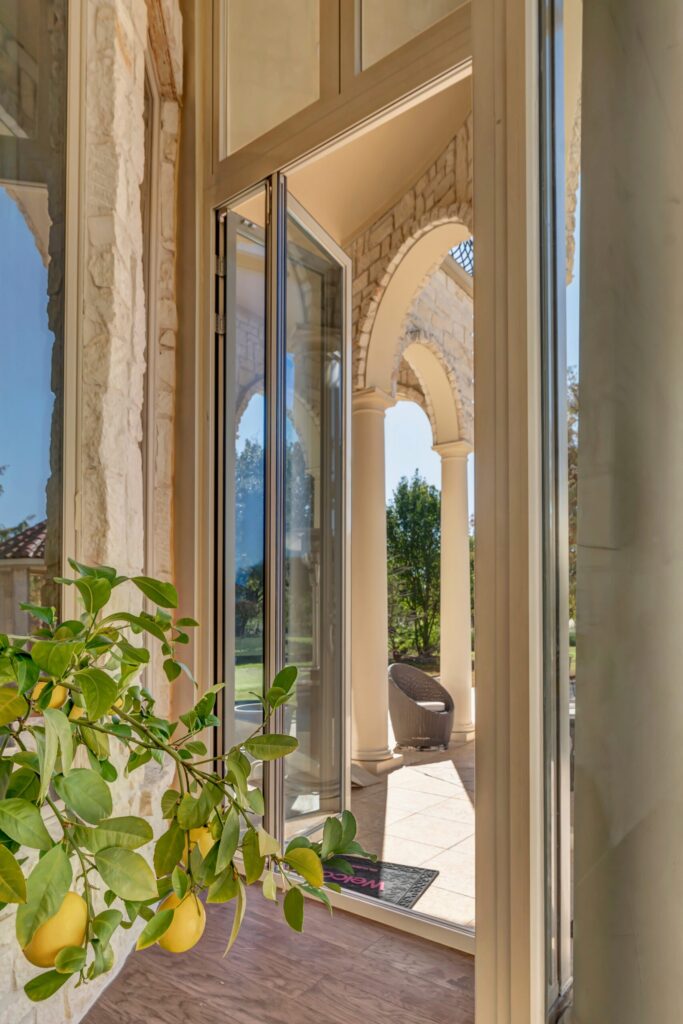
I sell both. They solve different problems. Bifold doors give you the widest possible opening — a 6-panel bifold across a 16-foot opening can fold completely clear, leaving roughly 15 feet of open passage. Lift-and-slide doors give you bigger individual glass panels and a simpler mechanism.
- Choose lift-and-slide when the cleanest possible glass wall matters most — panels can be wider (up to 13 feet on our largest systems) because they don’t need to pivot and fold, so fewer vertical frame lines interrupt the view when closed
- Lift-and-slide also makes sense when the door stays closed 90% of the time, opening mainly for parties or nice weather, and when your opening is very wide (20+ feet) with limited wall space for a folded stack
- Choose bifold when the door opens and closes frequently, you want the maximum clear opening width, the opening is 16 feet or narrower, or you want the dramatic folding effect as a design statement
- I’ve put both in my own projects — the lift-and-slide in my personal house stays closed most of the time giving me a clean glass wall; the bifold in our Frisco showroom gets opened daily because full-width passage matters for showroom traffic
Related: Aluminum Patio Door Energy Efficiency · Aluminum Patio Door Glass Package Options
FAQ
Q: How many panels do I need for a 12-foot patio door opening?
A: Four panels at roughly 36 inches each, or five panels at roughly 29 inches each. Four panels give you bigger glass and a simpler track layout. Five panels give you a tighter stack — each panel folds smaller. For most 12-foot openings, I recommend four panels.
Q: Should patio doors open inward or outward?
A: Outward-opening is our default recommendation for DFW homes. It preserves interior floor space, performs better in wind, and keeps the folded stack outside. Inward-opening makes sense when exterior space is tight or local codes restrict exterior projections.
Q: Can you do a bifold door on a corner without a post?
A: Yes. A corner-opening bifold removes the structural corner post and uses engineered headers to carry the roof load. The two sets of doors meet at 90 degrees with an integrated locking stile. This configuration requires additional structural engineering compared to a straight run.
Q: When should I choose lift-and-slide over bifold?
A: Choose lift-and-slide when the clean glass view matters most and the door will stay closed most of the time. The panels can be wider (fewer frame lines) and the stacking mechanism is simpler. Choose bifold when you want maximum clear opening width and plan to open the door frequently.
Q: Do more panels make the door harder to operate?
A: No — in a properly engineered bifold system, more panels mean each one is narrower and lighter. A 6-panel door is actually easier to fold than a 3-panel door because each individual panel weighs less. The tradeoff is more visible frame lines when the door is closed.
Your configuration choice changes how you live with the door every day. Schedule your free consultation at any of our four DFW showrooms and I’ll walk you through every option with the doors right in front of you.