

Bifold Door Track Systems and Thresholds: Floor Track vs. Top-Hung, Weight Ratings & ADA Options

Home » Bifold Door Track Systems & Thresholds Guide | Love That Door
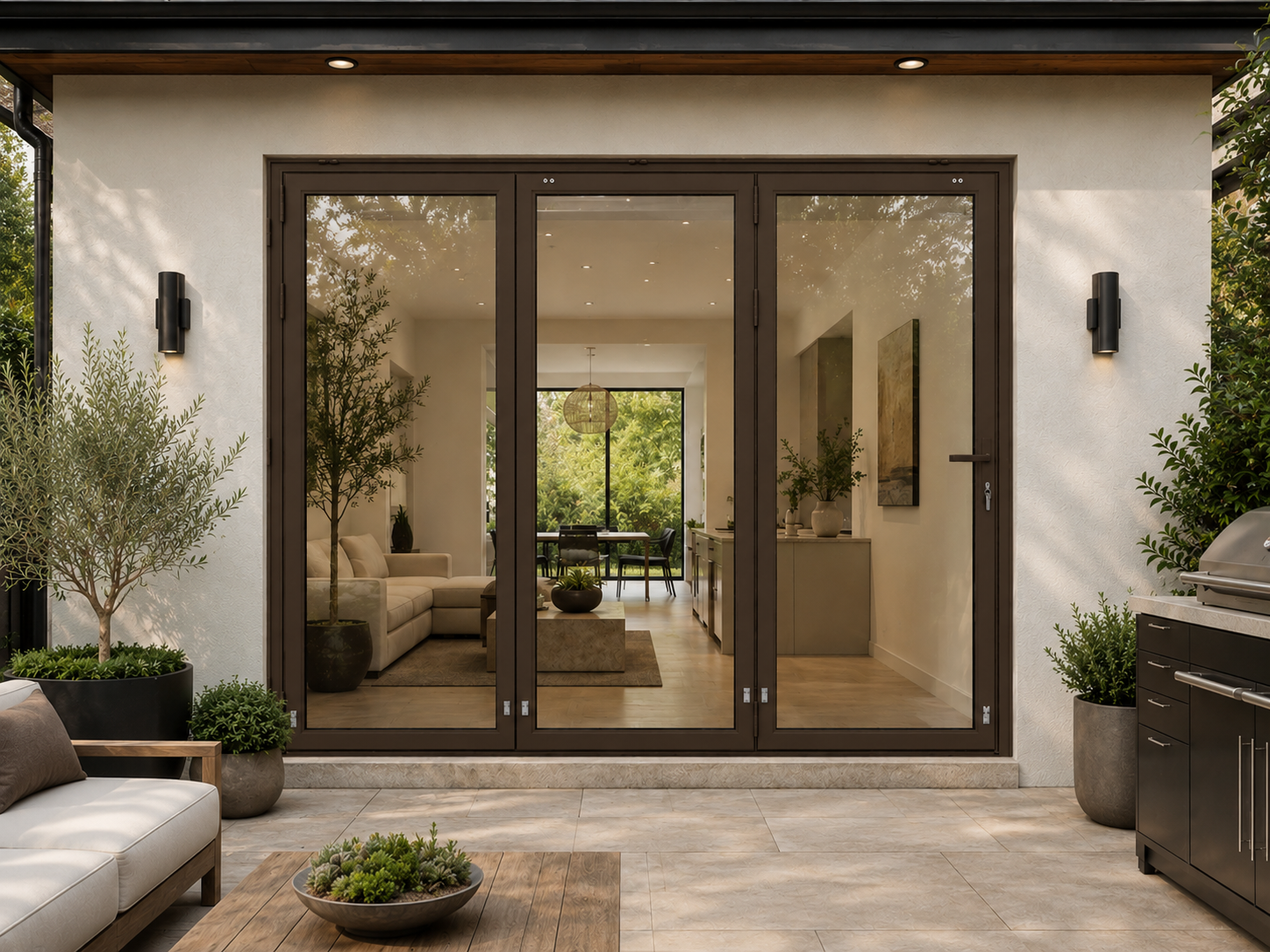
The track system is the single most important component on any bifold door — it carries the entire weight of the panels, guides their movement, and determines whether the door glides effortlessly or fights you every time. Our aluminum bifold doors use a top-hung German-engineered track system rated for panels up to 880 lbs each, with a self-cleaning track design that prevents the #1 maintenance headache on folding door systems.
What's the Difference Between Floor Track and Top-Hung Bifold Door Systems?
Love That Door®

Floor track (bottom-rolling) systems have door panels rolling on wheels in a channel recessed into the floor. The top track only guides — it doesn’t carry weight. Two problems: the channel collects dirt, leaves, and debris you’ll be cleaning regularly, and the track creates a raised bump you step over every time.
Top-hung (top-rolling) systems suspend panels from a track mounted in the header above the opening. The bottom uses a slim guide pin that rides in a floor channel — the pin doesn’t carry weight, it just keeps panels tracking straight.
- Top-hung is how our aluminum bifold doors are built — every panel hangs from the top track, the floor stays clean and uninterrupted
- The engineering challenge: the header track and building structure above must handle the full door weight; our German-engineered hardware is rated for 880 lbs per panel — a 6-panel system could theoretically carry over 5,000 lbs
- Floor track systems made sense decades ago when hardware couldn’t reliably support heavy panels from above; that’s no longer the case with modern engineering
- The bottom track on a top-hung system only guides — a grain of sand in the guide channel won’t make the door feel heavy the way it would on a floor-rolling track with 200 lbs pressing down on it
Schedule your free consultation at any of our 4 DFW showrooms.
Related Content →
How Bifold Door Hardware Works
Aluminum Patio Door Buyer’s Guide
Book your FREE in-home or showroom consultation today—we'll measure your space, explore custom designs, and bring your vision to life!
Get a FREE quote! Share your measurements or a photo of your space, and our design experts will send you a personalized price estimate.

How Much Weight Can a Bifold Door Track Handle?
Panel weight depends on size, glass thickness, and frame material. A typical aluminum bifold panel with 1″ double-pane glass weighs roughly 5.5 to 7 lbs per square foot.
- A 3-foot-wide by 9-foot-tall panel (27 sq ft) weighs 150-190 lbs; a 4-foot-wide by 10-foot panel (40 sq ft) weighs 220-280 lbs — these are real numbers from panels we ship
- Our track hardware is rated to 880 lbs per panel — roughly 3-4x what a standard panel weighs in most residential installations; that headroom means carriage rollers, bearings, and track profiles operate well below their failure point so the door glides because the hardware isn’t stressed
- For reference: a 6-panel bifold at 10 feet tall and 3.5 feet wide each totals roughly 210 sq ft of glass — about 1,150-1,470 lbs across six moving panels, distributed across six separate carriage assemblies well within their working range
Related Content →
Aluminum Patio Door Testing Standards
Aluminum Patio Door Glass Package Options
Can You Have a Flush Threshold on Bifold Doors?
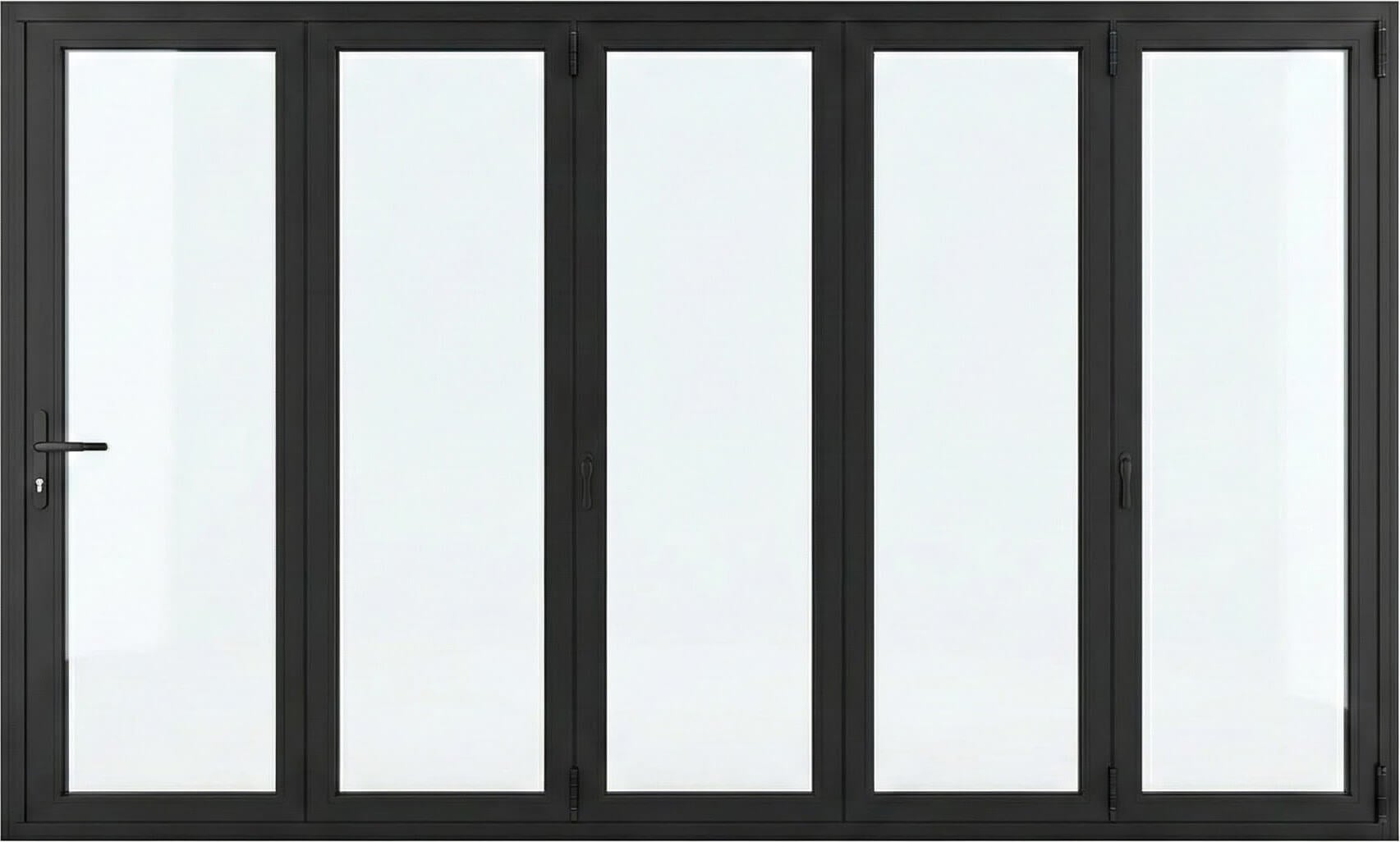
Yes — and you should. A flush threshold means the bottom track sits level with your finished floor. No lip. No bump. No trip hazard.
- Barrier-free access: A raised threshold is a dealbreaker for wheelchairs and walkers — flush thresholds make the opening genuinely ADA-compliant; strollers, hand trucks, and furniture on wheels cross without catching
- Visual continuity: The indoor floor flows straight into the outdoor surface without a metal line interrupting the sightline
- The tradeoff is water management — when the track sits level with the floor, our flush threshold design uses an integrated drainage channel that captures water and routes it out through weep holes on the exterior side, with a gasket seal on each panel bottom engaging when the door is closed
- Flush thresholds work best with a covered patio or overhang; for fully exposed openings, we may recommend a slightly raised threshold (¼” to ⅜”) for additional drainage margin
Schedule your free consultation at any of our 4 DFW showrooms.
Related Content →
How Bifold Door Hardware Works
Patio Door Configuration Guide
Book your FREE in-home or showroom consultation today—we'll measure your space, explore custom designs, and bring your vision to life!
Get a FREE quote! Share your measurements or a photo of your space, and our design experts will send you a personalized price estimate.

What Is a Self-Cleaning Track and Why Does It Matter?
A self-cleaning track uses angled surfaces and debris channels so that dirt, sand, and small debris fall away from the running surface instead of building up on it. The #1 call we get about older bifold systems is “the doors don’t slide smoothly anymore” — nine times out of ten, it’s debris grinding against the guide pin or rollers.
- Our German-engineered track system solves this two ways: the running surface for top-hung carriages is enclosed inside the header where dirt can’t reach it, and the bottom guide channel uses angled walls that push debris down and out through drain slots
- Under normal residential use, the guide track needs attention roughly once or twice a year — a quick pass with a vacuum or compressed air; the self-cleaning design handles day-to-day dust and debris
- Heavier buildup (mud, wet leaves tracked in during storms) should be cleared manually when you notice it; the bottom track on a top-hung system only guides — it doesn’t carry weight, so a small grain of sand won’t make the door feel rough
Related Content →
Bifold Door Track Systems and Thresholds
Aluminum Patio Door Energy Efficiency
How Do German-Engineered Carriage Systems Handle Door Weight?
How Do German-Engineered Carriage Systems Handle Door Weight?
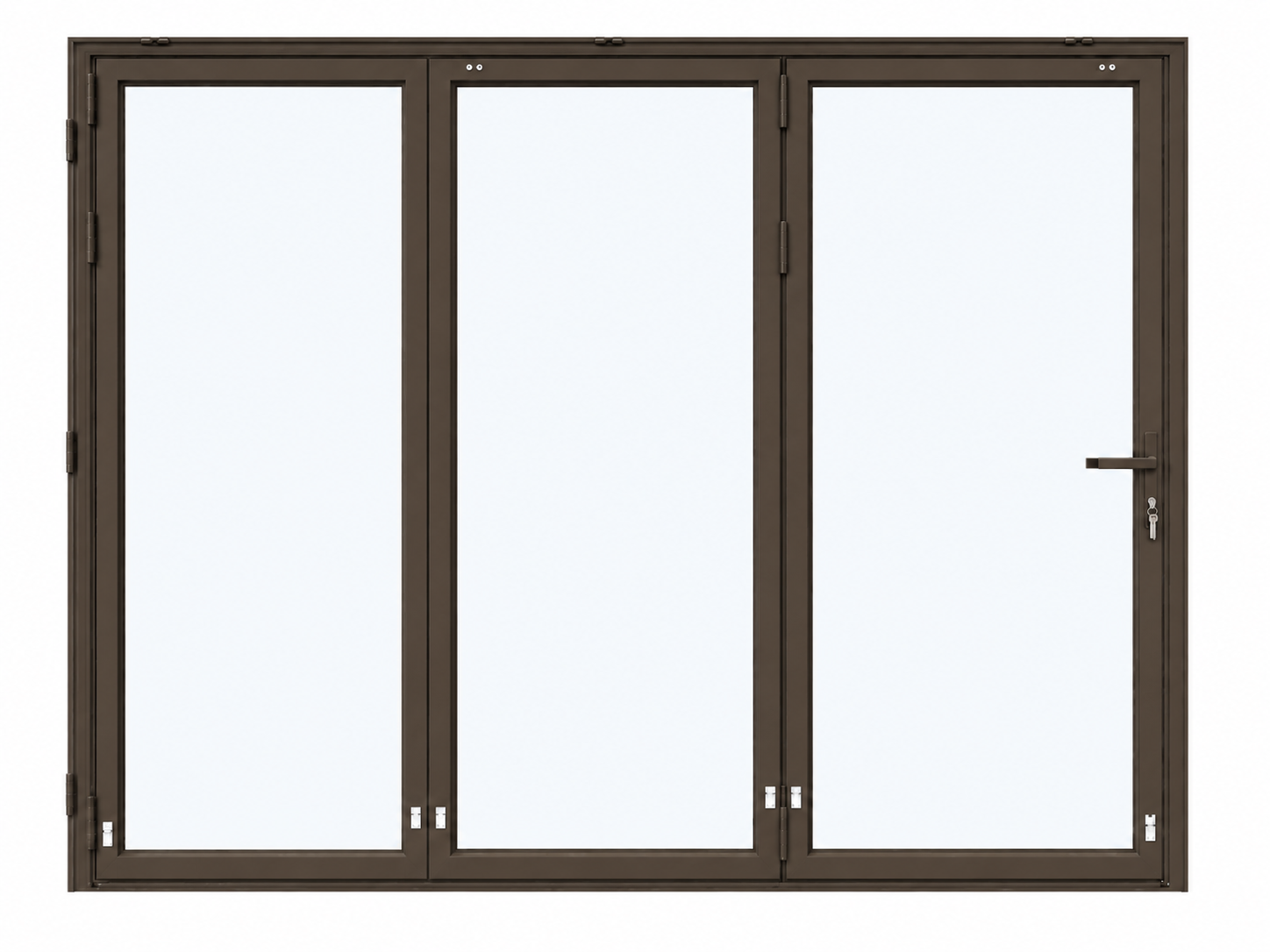
The carriage is the assembly that connects each panel to the top track. It contains precision bearings that roll inside the track profile.
- Each carriage uses sealed stainless-steel ball bearings running in a machined track profile — permanently lubricated and fully enclosed, no maintenance and no grit intrusion
- The carriage design distributes panel weight across multiple contact points — instead of a single roller carrying the entire load, the assembly spreads it across four to six bearing surfaces, which is how a compact hardware piece handles 880 lbs without binding
- The pivot points where panels fold against each other use similar bearing construction — every moving joint (carriage, hinge, pivot) is bearing-driven, not simply a pin in a hole; that’s the difference between a door that still glides after 10 years and one that starts dragging after 18 months
Schedule your free consultation at any of our 4 DFW showrooms.
Related Content →
How Bifold Door Hardware Works
Aluminum Patio Door Buyer’s Guide
Why Love That Door Builds Every Bifold With German-Engineered Hardware
Love That Door®
Why Love That Door Builds Every Bifold With German-Engineered Hardware
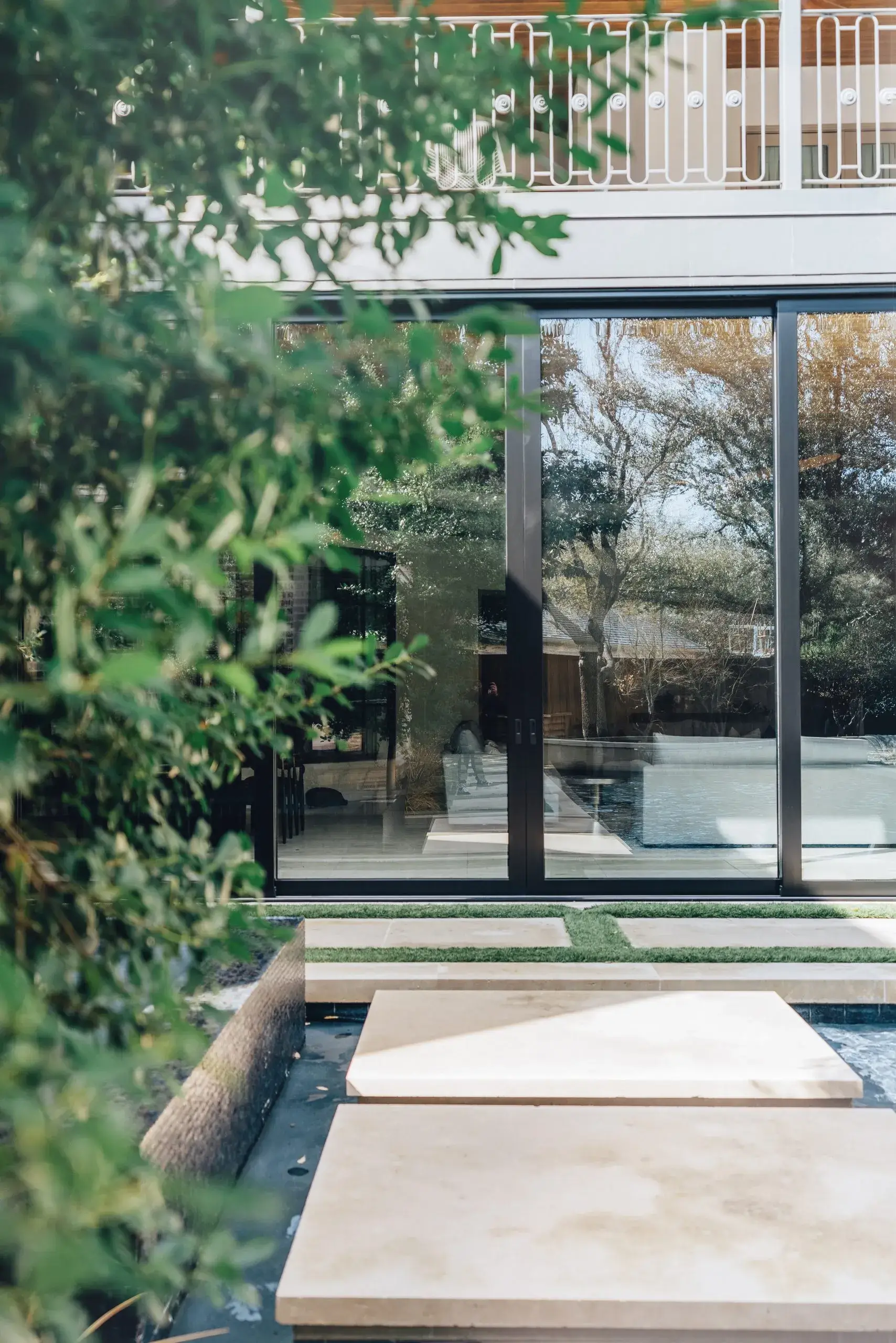
Every bifold we ship uses the same hardware architecture, selected for the certified weight of the system. Because we own our factories and install with in-house crews, the track, carriage, and threshold are specified together as one engineered system — not pieced together from whatever a reseller has in stock.
- Factory-direct — we control every spec, material, and quality checkpoint
- German-engineered hardware rated to 880 lbs per panel, built to last
- In-house installation — not subcontractors, not third-party crews
- 4 DFW showrooms — Dallas, Frisco, Fort Worth, Grapevine
Schedule your free consultation at any of our 4 DFW showrooms and see a bifold glide on its self-cleaning track before you buy.
Expert Insight

From Chad Crenshaw, Founder & Chief Engineer:
“I’ve seen homeowners spend $15,000 on a patio door and get it installed by a handyman with a tube of silicone. That door will fail — not because of the product, but because nobody who understood it was there when it went in. We build the door and we install the door. Same team, same standard.”
Book your FREE in-home or showroom consultation today—we'll measure your space, explore custom designs, and bring your vision to life!
Get a FREE quote! Share your measurements or a photo of your space, and our design experts will send you a personalized price estimate.
Frequently Asked
Questions
01.
Q: Do bifold doors need a bottom track?
Yes, but only a guide track — not a load-bearing one. In a top-hung system like ours, the bottom track is a slim channel (roughly 5/8″ wide) that a guide pin rides in to keep the panels aligned. It doesn’t carry weight. The entire panel load hangs from the top track.
02.
Q: Can I get a completely flush, zero-step threshold on my bifold door?
Yes. Our flush threshold option sits level with the finished floor for true barrier-free access. The integrated drainage channel and panel gasket seal manage water. We recommend a covered overhang for fully exposed openings.
03.
Q: How long does a self-cleaning track actually stay clean?
Under normal residential use, the guide track needs attention roughly once or twice a year — a quick pass with a vacuum or compressed air. The self-cleaning design handles day-to-day dust and debris.
04.
Q: What’s the maximum panel size your track system supports?
Our German-engineered hardware is rated for panels up to 880 lbs each. In practical terms that supports panels up to roughly 4 feet wide by 10+ feet tall with 1″ double-pane glass. Panel count (up to 14 leaves) and total system width depend on your opening.
05.
Q: Is a top-hung track system harder to install than floor track?
The structural requirements are different, not harder. A top-hung system needs a header capable of supporting the full door weight — typically an LVL beam or steel lintel specified by your structural engineer. Once the header is in place, the track mounts directly to it.
Book your FREE in-home or showroom consultation today—we'll measure your space, explore custom designs, and bring your vision to life!
Get a FREE quote! Share your measurements or a photo of your space, and our design experts will send you a personalized price estimate.
Get a free quote
REQUEST A QUOTE
Ready to Elevate Your Home with Custom Doors and Windows?
Fill out your contact details and let our design experts guide you through the process:
- Free in-home consultation tailored to your needs.
- Rough measurements and custom design for a perfect fit.